USA
USA UK
UK Australia
 UAE
UAE Canada
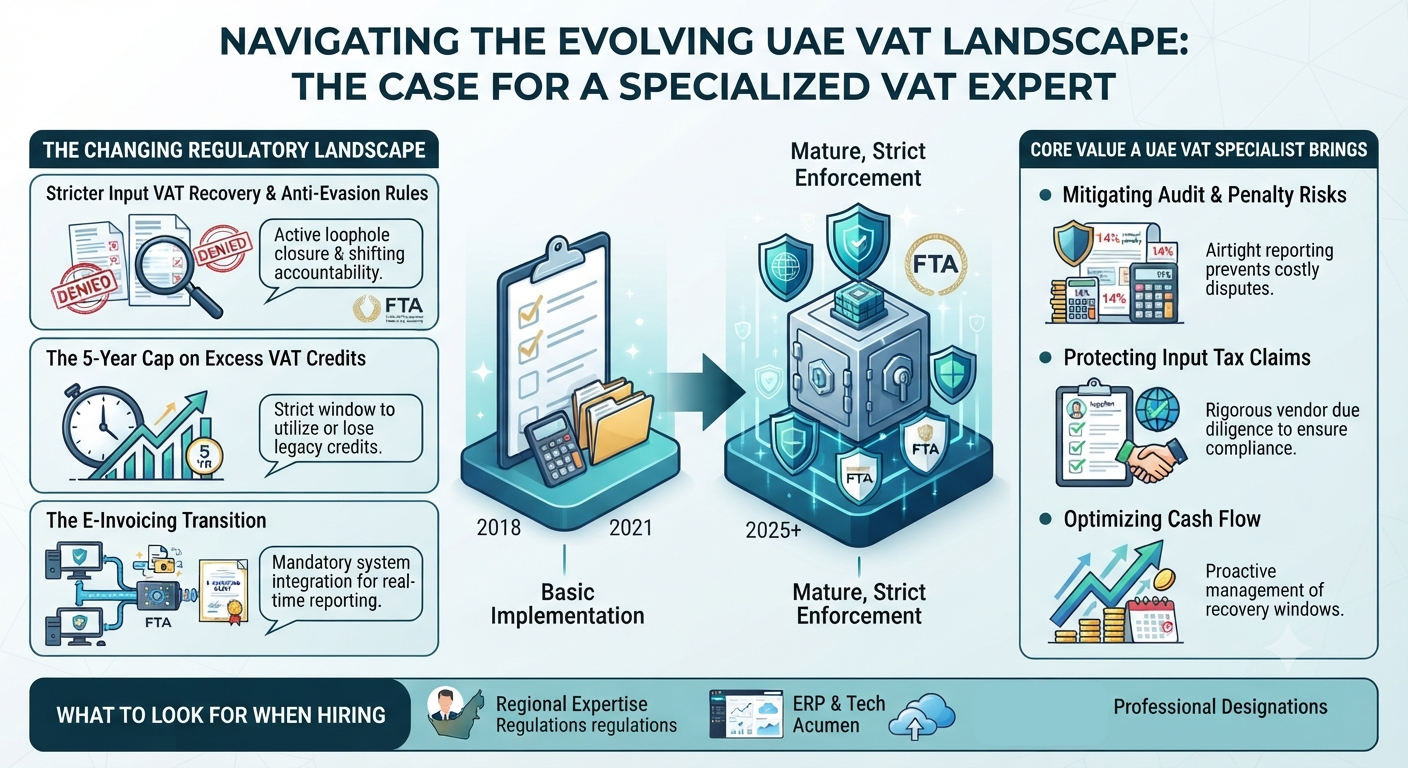
Since the UAE introduced value-added tax at a standard rate of 5%, the regulatory landscape has evolved from basic implementation to strict, mature enforcement. Recent legislative milestones—including the landmark amendments under Federal Decree-Law No. 16 of 2025 and Federal Decree-Law No. 17 of 2025, alongside the rollout of the UAE e-invoicing mandate—have fundamentally altered how businesses must handle indirect taxation.
For business owners and CFOs operating in Dubai, Abu Dhabi, and across the emirates, treating VAT as a simple quarterly bookkeeping exercise is no longer viable. Ensuring full compliance requires dedicated expertise. Here is a breakdown of why hiring a specialized UAE VAT Specialist has become critical to safeguarding your bottom line.
The Changing Regulatory Landscape: What’s New?
The Federal Tax Authority (FTA) is actively tightening compliance frameworks, closing loopholes, and shifting accountability onto taxpayers. Recent updates demand specialized oversight to navigate:
Stricter Input VAT Recovery & Anti-Evasion Rules: Under amended regulations, the FTA can outright deny input VAT recovery if a transaction is linked to tax evasion—even indirectly—and the recipient should have known based on the circumstances. Passive acceptance of supplier invoices is a major financial risk.
The 5-Year Cap on Excess VAT Credits: Historical tax credits can no longer linger indefinitely on balance sheets. Businesses face a strict 5-year window to offset or claim refunds for excess recoverable input tax, making proactive cash flow management essential.
The E-Invoicing Transition: With the upcoming phased rollout of the UAE’s national e-invoicing system, companies must integrate accredited electronic invoicing infrastructure that aligns seamlessly with FTA reporting standards.
Core Value a UAE VAT Specialist Brings to Your Business
1. Mitigating Audit and Penalty Risks
FTA audits are increasingly thorough. Penalties for late filings, incorrect tax treatments, or unadjusted errors compound quickly (including a 14% annual late-payment penalty calculated monthly). A dedicated specialist ensures your reporting is airtight, drastically reducing the risk of costly disputes.
2. Protecting Input Tax Claims Through Vendor Due Diligence
Because the FTA now penalizes businesses for failing to vet supply chains tainted by improper tax treatment (such as misapplied reverse-charge mechanisms or unregistered suppliers), a specialist institutes rigorous vendor-screening workflows before input tax is claimed.
3. Optimizing Cash Flow & Managing Deadlines
With the new limitation rules on excess VAT credits, a qualified professional ensures your legacy credits are recovered or utilized within legal windows—preventing valuable capital from permanently lapsing.
What to Look for When Hiring
When recruiting a UAE VAT Specialist for your team, look for professionals who possess:
Regional Expertise: Hands-on experience interpreting FTA executive regulations and handling mainland versus free zone/designated zone nuances.
ERP & Technology Acumen: Familiarity with modern accounting systems configured for GCC tax rules and readiness for the national e-invoicing framework.
Professional Designations: Recognized qualifications such as a CA, ACCA, CTA, ADIT, or official FTA Tax Agency certification.
Conclusion
Navigating UAE tax regulations requires more than generalized accounting knowledge—it demands proactive, specialized strategy. Bringing a dedicated UAE VAT Specialist on board protects your enterprise from hidden compliance traps, optimizes your tax recovery workflows, and ensures your business remains resilient in an evolving regulatory environment.
Hire UAE VAT Specialists
Navigating 2026 Legislative Shifts
Shielding Against Audit Exposure
Rigorous Vendor Due Diligence
Protecting Excess Tax Credits
Do You Want To Manage Your Finances Effortlessly By Hiring Accountants Cost-Effectively?
Do You Have Any Questions?