USA
USA UK
UK Australia
 UAE
UAE Canada
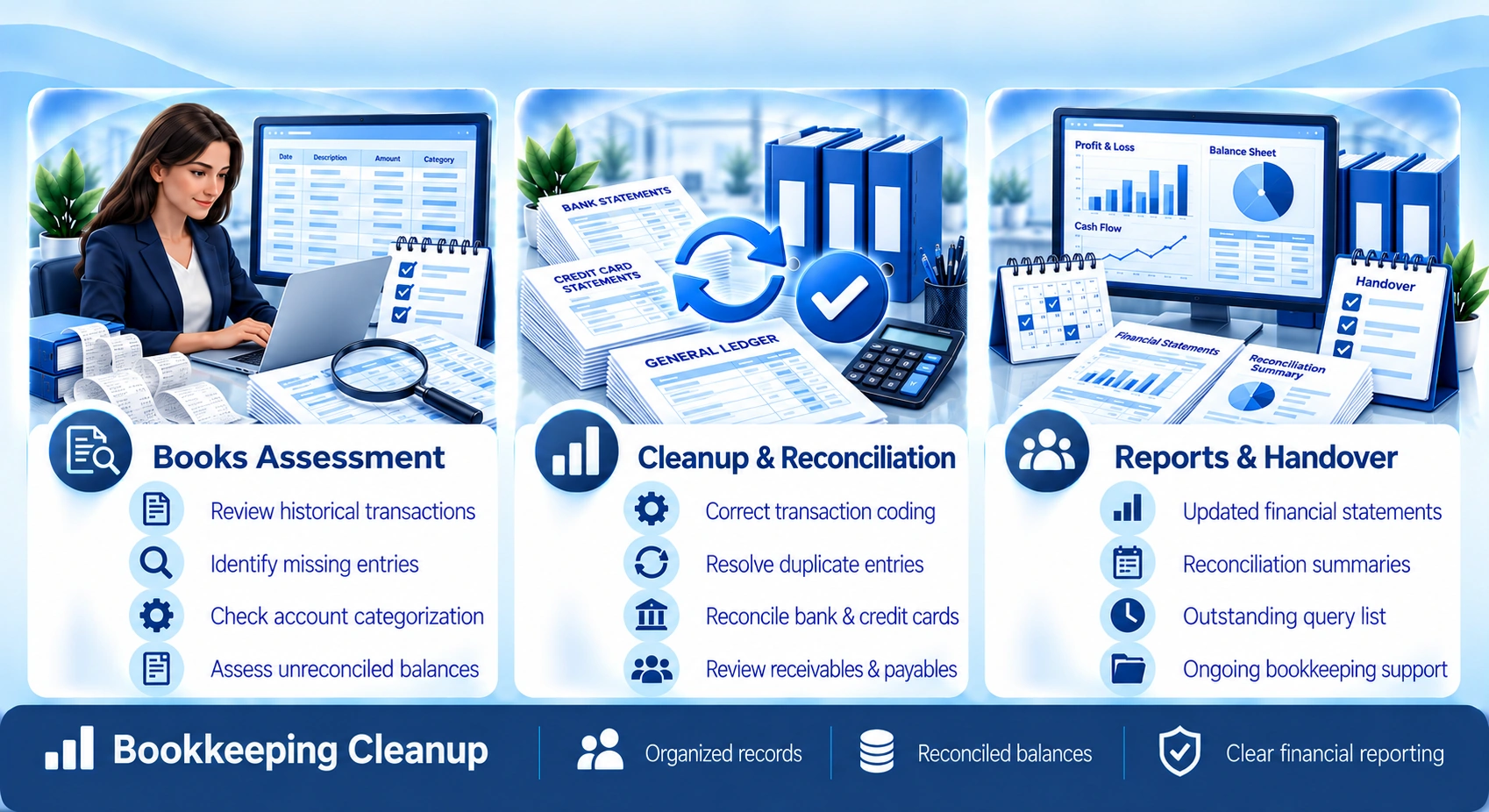
When running a growing business, bookkeeping often gets pushed to the back burner. Between managing sales, customer support, and daily operations, updating bank reconciliations or categorizing receipts can feel like a secondary task.
Then tax season hits. Or a bank requests updated financial statements for a loan. Or you simply look at your balance sheet and realize the numbers don't add up.
At OBG Outsourcing Private Limited, we see this scenario constantly. Backlogged, messy accounting isn't just an inconvenience—it’s a direct threat to your profitability, cash flow, and tax compliance. Here is why bookkeeping cleanup and catch-up work is critical, and how a structured approach turns financial chaos into clarity.
The Hidden Cost of "Catch-Up" Bookkeeping
Postponing accounting tasks causes errors to compound exponentially. A few months of unrecorded transactions quickly transform into a mountain of discrepancies.
Missed Tax Deductions: Uncategorized expenses or missing receipts mean you cannot claim valid tax deductions, leading to higher tax bills than necessary.
Inaccurate Cash Flow Decisions: Making business investments based on outdated or incorrect bank balances often leads to cash shortages.
Audit and Compliance Risks: Unreconciled accounts raise red flags during audits, potentially triggering fines or penalties from tax authorities.
Lender & Investor Roadblocks: Banks and investors require clean, up-to-date Balance Sheets and Profit & Loss statements before approving funding.
4 Signs Your Business Needs a Bookkeeping Cleanup
Unreconciled Bank & Credit Card Accounts: Your software balances (QuickBooks, Xero) do not match your physical bank statements.
Growing "Uncategorized" Line Items: Your Chart of Accounts has large dollar amounts sitting in "Uncategorized Expense" or "Ask My Accountant."
Negative Asset or Liability Accounts: You see negative balances on bank accounts, credit cards, or payroll liabilities.
Outdated Backlogs: You are more than two months behind on recording financial transactions.
The OBG Outsourcing Cleanup Process: How We Fix It
At OBG Outsourcing, bringing chaotic financial records up to date is our core strength. Here is how our specialized team approaches a full cleanup project:
1. Complete Historical Diagnostic
We perform a comprehensive review of your existing accounting software (QuickBooks, Xero, NetSuite) to identify duplicate entries, missing statements, misclassified transactions, and uncleared checks.
2. Chart of Accounts Optimization
A cluttered Chart of Accounts prevents accurate financial analysis. We restructure your categories to conform to standard GAAP/IFRS practices tailored to your specific industry.
3. Systematic Bank & Credit Card Reconciliation
We reconstruct month-by-month historical data, matching every bank, credit card, loan, and payment gateway statement (Stripe, PayPal, Shopify) against your ledger until every penny is accounted for.
4. Reconciliation of Accounts Receivable & Payable
We resolve unapplied payments, fix duplicate invoices, and clean up open vendor credits to reflect your true cash position.
5. Delivery of Audit-Ready Financial Statements
Once clean, we generate fully accurate Balance Sheets, Income Statements (P&L), and Cash Flow Reports so you can make informed business decisions with confidence.
Ready to Get Your Books Back on Track?
You don't have to tackle months or years of messy accounting alone. Partnering with an expert team saves you hundreds of hours and guarantees compliance.
Contact OBG Outsourcing Private Limited today to schedule a consultation and transform your financial records into clean, reliable data.
Bookkeeping Cleanup
Missed Tax Deductions
Inaccurate Cash Flow Decisions
Audit & Compliance Risks
Lender & Investor Roadblocks
Do You Want To Manage Your Finances Effortlessly By Hiring Accountants Cost-Effectively?
Do You Have Any Questions?