USA
USA UK
UK Australia
 UAE
UAE Canada
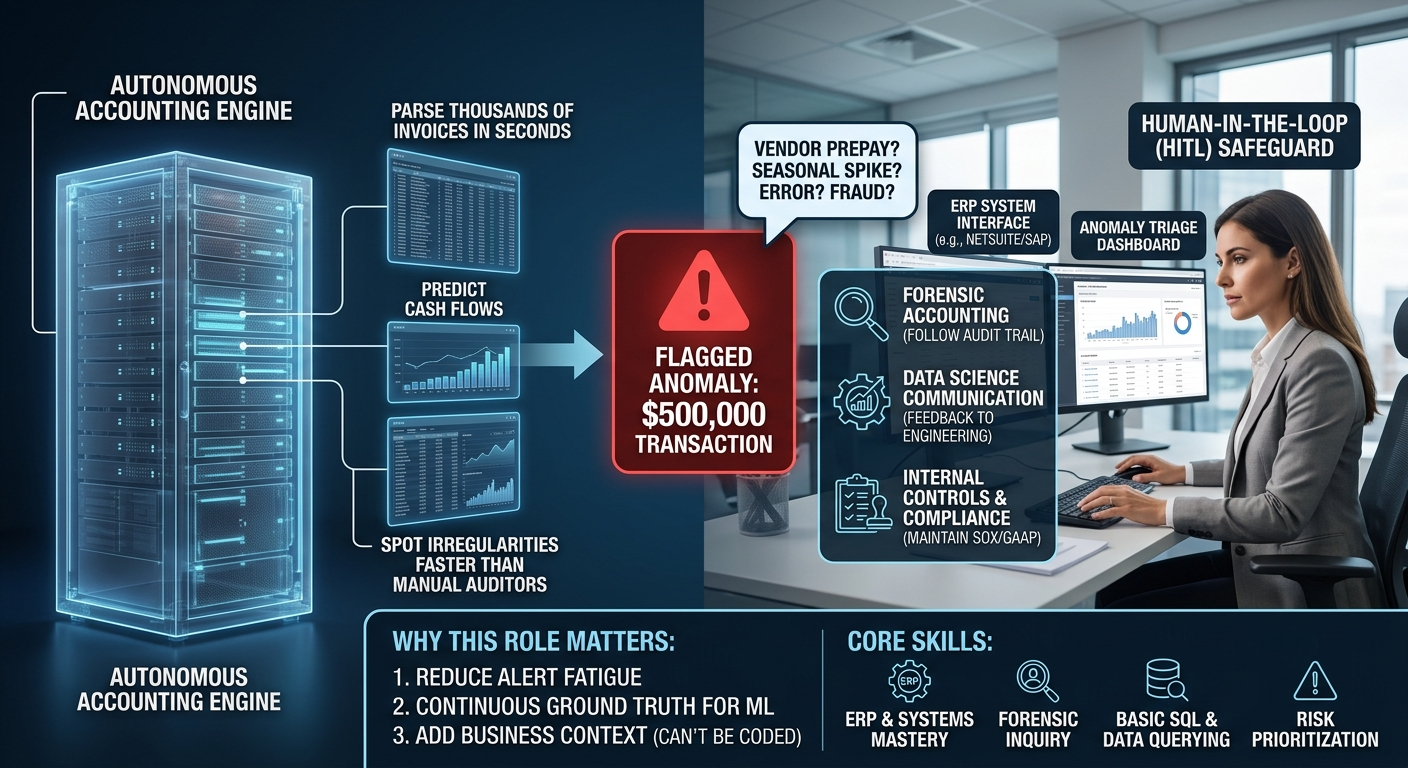
Autonomous accounting tools are transforming how finance teams process data. Machine learning algorithms can now parse thousands of invoices in seconds, predict cash flows, and spot irregularities across complex general ledgers faster than any team of manual auditors ever could.
However, as AI takes over the heavy lifting in accounting, it introduces a new challenge: algorithmic edge cases.
When an AI engine flags an unusual $500,000 transaction, is it a legitimate vendor prepay, a seasonal spike, a system process error, or actual fraud?
This gap between automated detection and real-world business context has birthed a critical new financial role: The AI Ledger & Anomaly Review Analyst.
What Is an AI Ledger & Anomaly Review Analyst?
An AI Ledger Analyst operates as the primary Human-in-the-Loop (HITL) safeguard for automated accounting platforms.
Rather than manually entering journal entries or building spreadsheets from scratch, these professionals monitor automated outputs, investigate AI-flagged ledger discrepancies, and calibrate the machine learning models driving the enterprise resource planning (ERP) system.
They sit at the intersection of three disciplines:
Forensic Accounting: Knowing where financial data breaks down and how to follow an audit trail.
Data Science Communication: Translating false positives into actionable feedback for data engineering teams.
Internal Controls & Compliance: Ensuring overrides maintain strict SOX, GAAP, or IFRS compliance.
Why Is This Role Rapidly Gaining Traction?
1. Alert Fatigue Is Real
Automated anomaly detection systems are intentionally designed to be risk-averse. As a result, they generate high volumes of false positives. Without a dedicated analyst to triage these alerts, finance managers end up overwhelmed by notifications—leading to ignored risks or major operational bottlenecks.
2. Machine Learning Requires Continuous Ground Truth
AI engines do not learn in a vacuum. To reduce false positives over time, the algorithm needs constant, high-quality human feedback. The AI Ledger Analyst acts as the "trainer," confirming which anomalies were genuine errors and which were benign business activities.
3. Business Context Can't Be Coded
An AI model sees numbers; an analyst sees context. A sudden 400% increase in cloud infrastructure spend might look like an anomaly to a machine learning model, but an analyst who knows the company launched a major product update this week can verify and clear the alert in minutes.
Core Skills to Look For When Hiring
If you are building out your modern finance structure, look for candidates who blend traditional accounting fundamentals with data literacy:
ERP & Systems Mastery: Hands-on experience with platforms like NetSuite, SAP, or Workday.
Forensic Inquiry: The mindset of an internal auditor who asks why a discrepancy occurred rather than just clearing the queue.
Basic SQL & Data Querying: The ability to pull underlying sub-ledger details without relying entirely on IT.
Risk Prioritization: Knowing how to categorize risks into urgent escalations versus routine false positives.
AI will not replace accounting teams—but finance teams using AI, backed by expert Human-in-the-Loop oversight, will replace those that don't. Hiring dedicated AI Ledger & Anomaly Review Analysts ensures your organization scales automated finance operations without sacrificing auditability, compliance, or accuracy.
AI & Next-Gen Review
The Algorithmic Edge Case Gap
The Human-in-the-Loop Safeguard
Cross-Functional Mastery
Strategic Business Impact
Do You Want To Manage Your Finances Effortlessly By Hiring Accountants Cost-Effectively?
Do You Have Any Questions?