 USA
USA UK
UK Australia
 UAE
UAE Canada
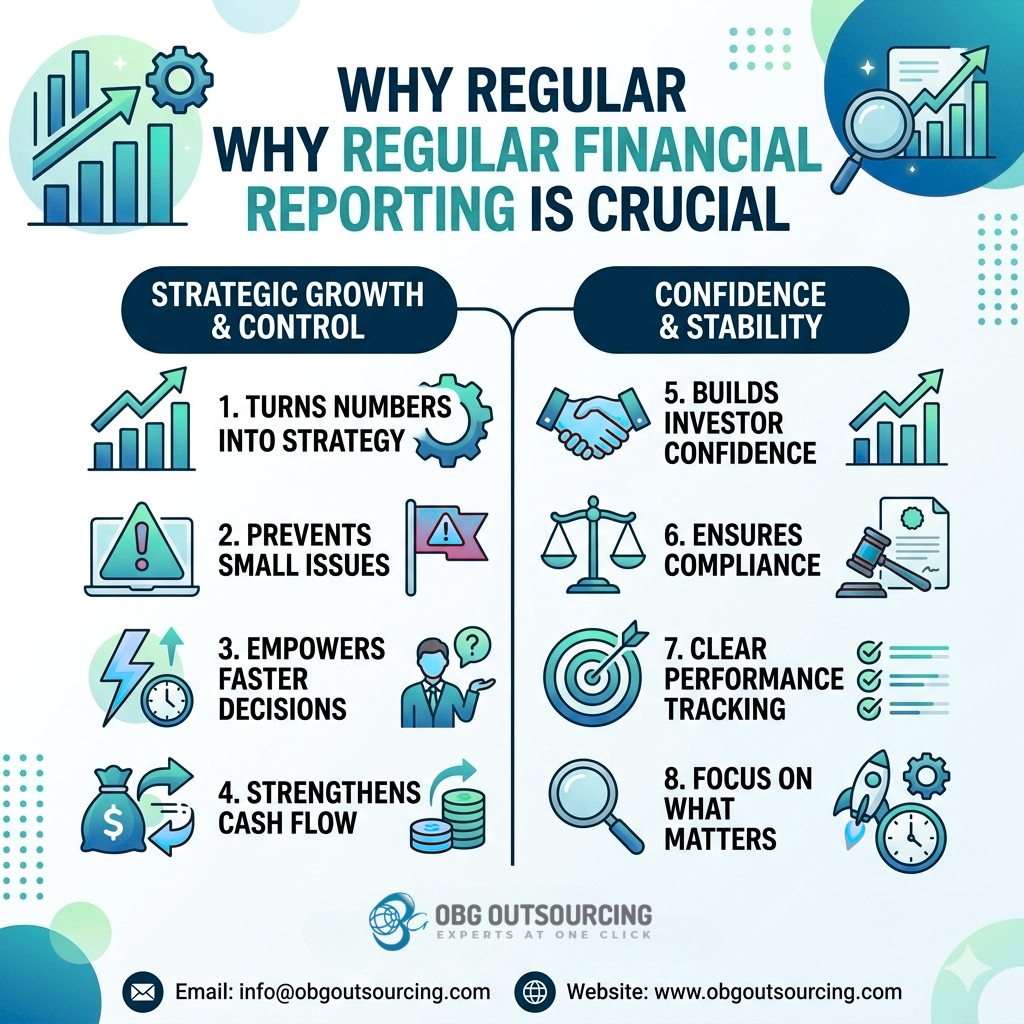
In today’s fast-moving business landscape, intuition alone is no longer enough to guide decisions. Success belongs to businesses that operate with clarity, agility, and insight—and that’s exactly what regular financial reporting delivers.
Financial reports are not just compliance documents or end-of-year formalities. They are living tools that tell the story of your business—where you’ve been, where you are, and where you’re heading.
Let’s explore why consistent financial reporting isn’t optional anymore—it’s essential.
1. Turns Numbers Into Strategic Direction
Every business generates data, but without structured reporting, it’s just noise.
Regular financial reports transform raw numbers into actionable insights:
Are your margins shrinking?
Which services or products are most profitable?
Where are you overspending?
With up-to-date reports, you’re no longer guessing—you’re making data-driven decisions that align with your business goals.
2. Prevents Small Issues From Becoming Big Problems
Financial problems rarely appear overnight. They build slowly:
Rising expenses
Declining cash flow
Late receivables
Regular reporting acts like an early warning system. It helps you spot red flags before they escalate, giving you time to act—not react.
3. Empowers Faster, Smarter Decisions
Opportunities don’t wait for quarterly reviews.
Whether it’s:
Hiring a new team member
Investing in marketing
Expanding operations
Having accurate, up-to-date financial data allows you to move quickly and confidently—without second-guessing your financial position.
4. Strengthens Cash Flow Control
Cash flow is the lifeblood of any business. Even profitable companies can struggle if cash isn’t managed properly.
Regular financial reporting helps you:
Track inflows and outflows
Predict future cash needs
Avoid unexpected shortfalls
This ensures your business remains stable and resilient, even during uncertain times.
5. Builds Investor and Stakeholder Confidence
If you’re seeking funding or working with stakeholders, transparency is key.
Consistent financial reports:
Demonstrate professionalism
Build trust with investors
Show financial discipline
Investors are far more likely to support a business that understands and communicates its financial position clearly.
6. Ensures Compliance and Reduces Risk
Regulatory requirements are constantly evolving. Missing deadlines or filing incorrect reports can lead to penalties and legal complications.
Regular financial reporting keeps you:
Organized
Compliant
Audit-ready
It reduces stress and ensures your business stays on the right side of regulations.
7. Provides Clear Performance Tracking
How do you measure success if you’re not tracking it consistently?
Financial reports allow you to:
Compare performance month-over-month
Evaluate growth trends
Set realistic financial targets
This clarity helps you stay focused and aligned with your long-term vision.
8. Frees You to Focus on What Matters Most
When your financial processes are structured and consistent, you spend less time worrying about numbers—and more time growing your business.
Outsourcing or automating financial reporting can further enhance efficiency, allowing you to focus on strategy, innovation, and customer experience.
The Modern Approach to Financial Reporting
Today’s businesses need more than spreadsheets. They need:
Real-time dashboards
Automated reporting systems
Expert financial insights
That’s where professional support—like the services offered by OBG Outsourcing—can make a difference. By streamlining your financial processes, you gain not just accuracy, but a competitive edge.
Final Thoughts
Regular financial reporting is not just about tracking performance—it’s about empowering growth, reducing risk, and making smarter decisions every day.
Businesses that prioritize consistent reporting don’t just survive—they thrive.
If you want to build a business that’s financially strong, scalable, and future-ready, start by making financial reporting a regular habit—not a last-minute task.
_(6).jpg)


1.png)
_(5).jpg)
.jpg)
_(4).jpg)
_(1).jpg)
_(2).jpg)
.png)