 USA
USA UK
UK Australia
 UAE
UAE Canada
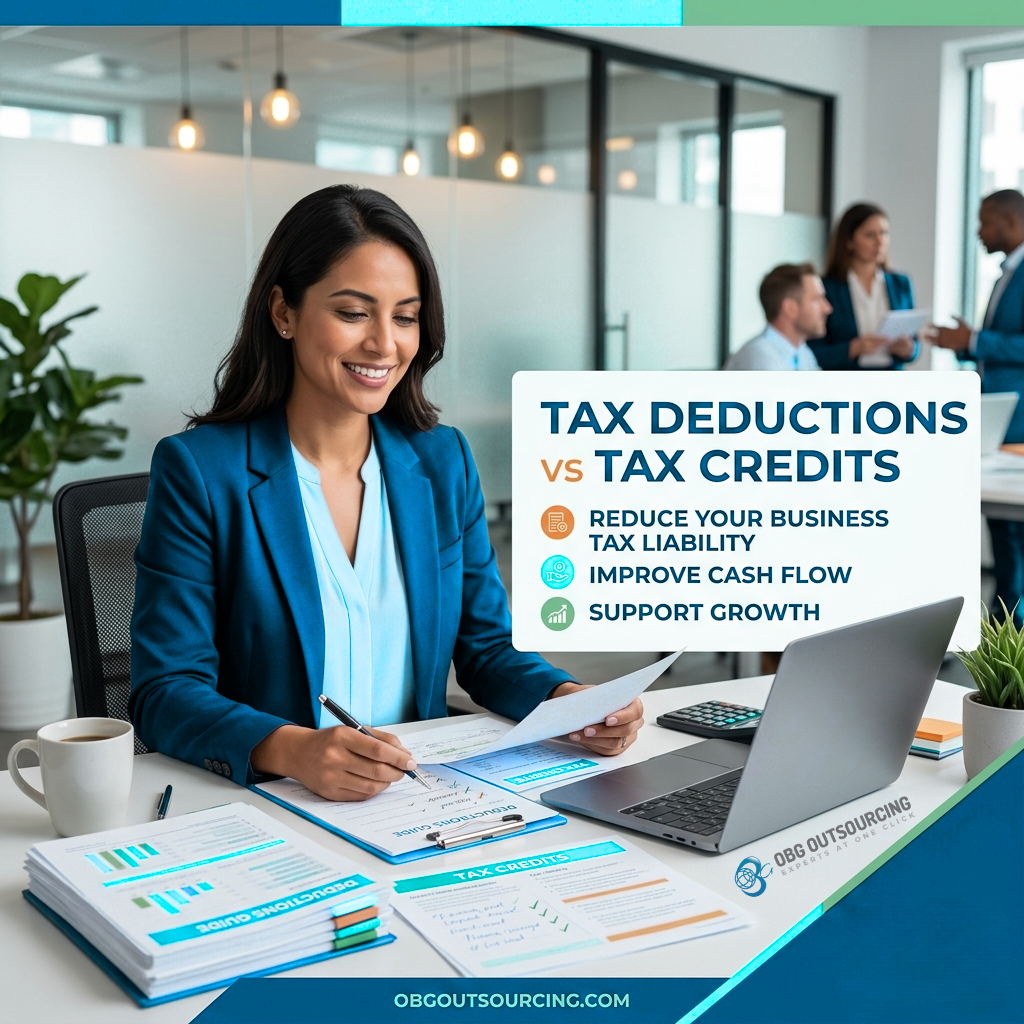
Running a business today means balancing growth, operations, customer expectations, and financial management — all while navigating an increasingly complex tax environment. Yet many businesses still overlook one of the most powerful financial tools available to them: tax deductions and tax credits.
While both can reduce your tax burden, they work very differently. Understanding how they impact your finances can help your business improve cash flow, increase profitability, and make smarter financial decisions throughout the year.
At OBG Outsourcing, we often see businesses paying more taxes than necessary simply because they are not fully aware of the deductions and credits available to them.
Tax Deductions vs Tax Credits: What’s the Difference?
Although these terms are often used together, they serve different purposes.
Tax Deductions
A tax deduction reduces your taxable income. This means the amount of income subject to tax becomes lower.
For example:
If your business earns ?20,00,000
And you claim ?5,00,000 in deductions
Your taxable income becomes ?15,00,000
Common business deductions include:
employee salaries
office rent
software subscriptions
internet and utilities
marketing expenses
travel costs
- professional service fees
Tax Credits
Tax credits directly reduce the amount of tax you owe.
For example:
If your business owes ?3,00,000 in taxes
And qualifies for a ?50,000 tax credit
Your final tax liability becomes ?2,50,000
Because credits reduce taxes directly, they are often even more valuable than deductions.
Why Businesses Miss Valuable Tax Savings
Many companies focus on revenue generation but fail to build structured financial tracking systems. As a result:
expenses go uncategorized,
eligible deductions are overlooked,
tax documentation becomes incomplete,
and year-end filings become stressful.
In fast-growing businesses, this problem becomes even larger because transactions increase rapidly while accounting processes remain outdated.
Without organized bookkeeping and management reporting, businesses may lose thousands in potential tax savings every year.
Common Business Tax Deductions You Should Know
1. Employee and Payroll Expenses
Salaries, bonuses, incentives, and employer contributions are usually deductible business expenses.
This often includes:
payroll taxes
employee insurance
retirement contributions
training programs
A properly managed payroll system ensures these deductions are accurately recorded.
2. Technology and Software Costs
Modern businesses rely heavily on digital tools.
Expenses for platforms such as:
accounting software,
CRM systems,
project management tools,
cloud storage,
and cybersecurity solutions
may qualify as deductible operational expenses.
Businesses using platforms like QuickBooks, Xero, or Zoho Books often benefit from cleaner expense tracking and automated categorization.
3. Marketing and Advertising Expenses
Digital advertising is now a major growth driver for businesses.
Deductible marketing expenses may include:
social media advertising,
SEO services,
website development,
email campaigns,
branding,
and content creation.
When marketing expenses are properly classified, businesses gain both tax benefits and stronger ROI analysis.
4. Office and Operational Expenses
Whether your business operates remotely or from a physical office, operational expenses are often deductible.
Examples include:
rent and utilities,
office supplies,
furniture and equipment,
internet bills,
maintenance costs,
- and coworking memberships.
5. Professional and Outsourcing Services
Fees paid to:
accountants,
consultants,
legal advisors,
outsourced finance teams,
and compliance professionals
are generally considered deductible business expenses.
This is one reason many businesses are turning toward outsourced accounting solutions to improve both efficiency and tax management.
Tax Credits That Can Benefit Businesses
Tax credits vary depending on country-specific regulations, industry incentives, and government programs. However, businesses may commonly qualify for credits related to:
research and development,
hiring initiatives,
sustainability investments,
export activities,
digital transformation,
or startup incentives.
Many businesses fail to explore these opportunities simply because they lack proactive financial planning.
The Importance of Accurate Financial Reporting
Tax optimization is not just about filing returns at the end of the year. It starts with accurate bookkeeping and real-time financial visibility.
Businesses with strong accounting systems can:
identify deductible expenses faster,
maintain cleaner audit trails,
forecast tax liabilities,
improve compliance,
and make informed financial decisions.
A customized chart of accounts and consistent monthly reporting create the foundation for effective tax planning.
Modern Businesses Need Year-Round Tax Strategy
One of the biggest mistakes businesses make is treating tax planning as a once-a-year activity.
Modern financial management requires:
monthly reconciliations,
ongoing expense reviews,
cash flow monitoring,
proactive forecasting,
and compliance tracking.
Businesses that plan taxes year-round are often in a stronger position to:
manage cash flow,
reduce financial surprises,
support expansion,
- and improve profitability.
How Outsourced Accounting Helps Reduce Tax Risks
As businesses scale, financial complexity increases. Managing taxes internally without experienced financial oversight can lead to:
reporting errors,
missed deductions,
compliance penalties,
delayed filings,
and operational inefficiencies.
Outsourced accounting and bookkeeping services provide:
structured financial management,
timely reporting,
improved compliance,
expense tracking accuracy,
and better tax preparation support.
This allows business owners to focus more on growth and less on administrative stress.
Final Thoughts
Understanding tax deductions and credits is not just about saving money during tax season — it’s about building a financially stronger and more efficient business.
Businesses that maintain organized accounting systems, monitor expenses carefully, and adopt proactive tax planning strategies are often better positioned for long-term growth.
In today’s competitive business environment, smart tax management is no longer optional. It is part of a modern financial strategy that supports sustainability, scalability, and profitability.
For businesses looking to simplify accounting, strengthen compliance, and improve financial visibility, professional financial support can make a significant difference.
Explore smarter financial solutions with OBG Outsourcing.
_(6).jpg)


1.png)
_(5).jpg)
.jpg)
_(4).jpg)
_(1).jpg)
_(2).jpg)
.png)