 USA
USA UK
UK Australia
 UAE
UAE Canada
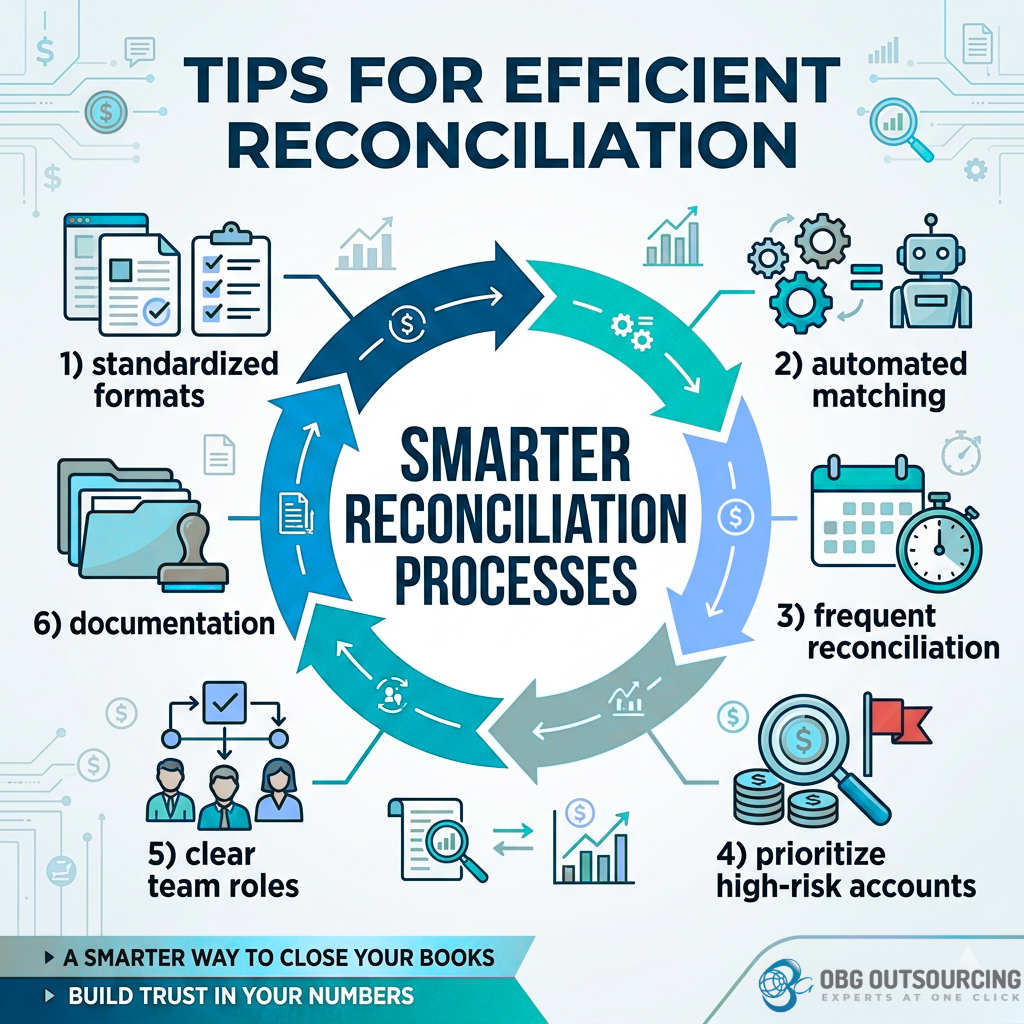
In today’s fast-moving financial landscape, reconciliation is no longer just a back-office task—it’s a strategic function that ensures accuracy, transparency, and trust in your numbers.
Yet for many businesses, reconciliation still feels like a time-consuming, error-prone process. The good news? With the right approach, it can become faster, cleaner, and far more insightful.
Let’s explore how to transform your reconciliation process into a well-oiled system that supports financial clarity and business growth.
Why Efficient Reconciliation Matters
Reconciliation isn’t just about matching numbers—it’s about:
Detecting errors before they escalate
Preventing fraud and duplicate transactions
Ensuring compliance and audit readiness
Building confidence in financial reporting
When done efficiently, reconciliation becomes a decision-making tool, not just a compliance requirement.
1. Standardize Your Reconciliation Process
One of the biggest inefficiencies comes from inconsistency.
Create a standard workflow for all reconciliations:
Define clear steps for each account type
Use consistent formats and templates
Set timelines for completion
Standardization reduces confusion and speeds up execution across teams.
2. Reconcile Frequently, Not Periodically
Waiting until month-end can create a backlog of issues.
Instead:
Perform weekly or even daily reconciliations for high-volume accounts
Address discrepancies in real-time
This minimizes errors and avoids last-minute stress during closing.
3. Leverage Automation & Technology
Manual reconciliation is slow and prone to mistakes.
Use tools that:
Automatically match transactions
Flag discrepancies instantly
Integrate with your accounting software
Automation can cut reconciliation time by up to 70% while improving accuracy.
4. Prioritize High-Risk Accounts
Not all accounts need the same level of attention.
Focus on:
Bank and cash accounts
Payroll and tax accounts
High-volume transaction accounts
This ensures critical areas are always accurate and compliant.
5. Maintain Clean and Organized Data
Reconciliation becomes difficult when data is messy.
Best practices:
Use consistent naming conventions
Avoid duplicate entries
Ensure timely data entry
Clean data = faster matching and fewer discrepancies.
6. Implement a Review & Approval System
A second set of eyes can catch what others miss.
Set up:
Maker-checker workflows
Approval checkpoints for reconciliations
This strengthens internal controls and reduces risk.
7. Train Your Team Continuously
Even the best systems fail without skilled people.
Ensure your team:
Understands reconciliation principles
Stays updated on compliance changes
Knows how to use tools effectively
A knowledgeable team is your strongest asset.
8. Document Everything
Proper documentation is critical for audits and future reference.
Maintain:
Supporting documents for all transactions
Notes for discrepancies and adjustments
Reconciliation reports and approvals
This ensures transparency and accountability.
9. Turn Reconciliation into Insight
Don’t just reconcile—analyze.
Use reconciliation data to:
Identify recurring errors
Spot unusual trends
Improve financial processes
This shifts reconciliation from reactive to proactive.
Final Thoughts
Efficient reconciliation isn’t about working harder—it’s about working smarter.
By combining standardization, automation, and strong internal controls, businesses can:
Save time
Reduce risk
Gain real financial clarity
At OBG Outsourcing, we believe reconciliation should empower your business—not slow it down. When done right, it becomes the foundation for smarter financial decisions and sustainable growth.
_(6).jpg)


1.png)
_(5).jpg)
.jpg)
_(4).jpg)
_(1).jpg)
_(2).jpg)
.png)