 USA
USA UK
UK Australia
 UAE
UAE Canada
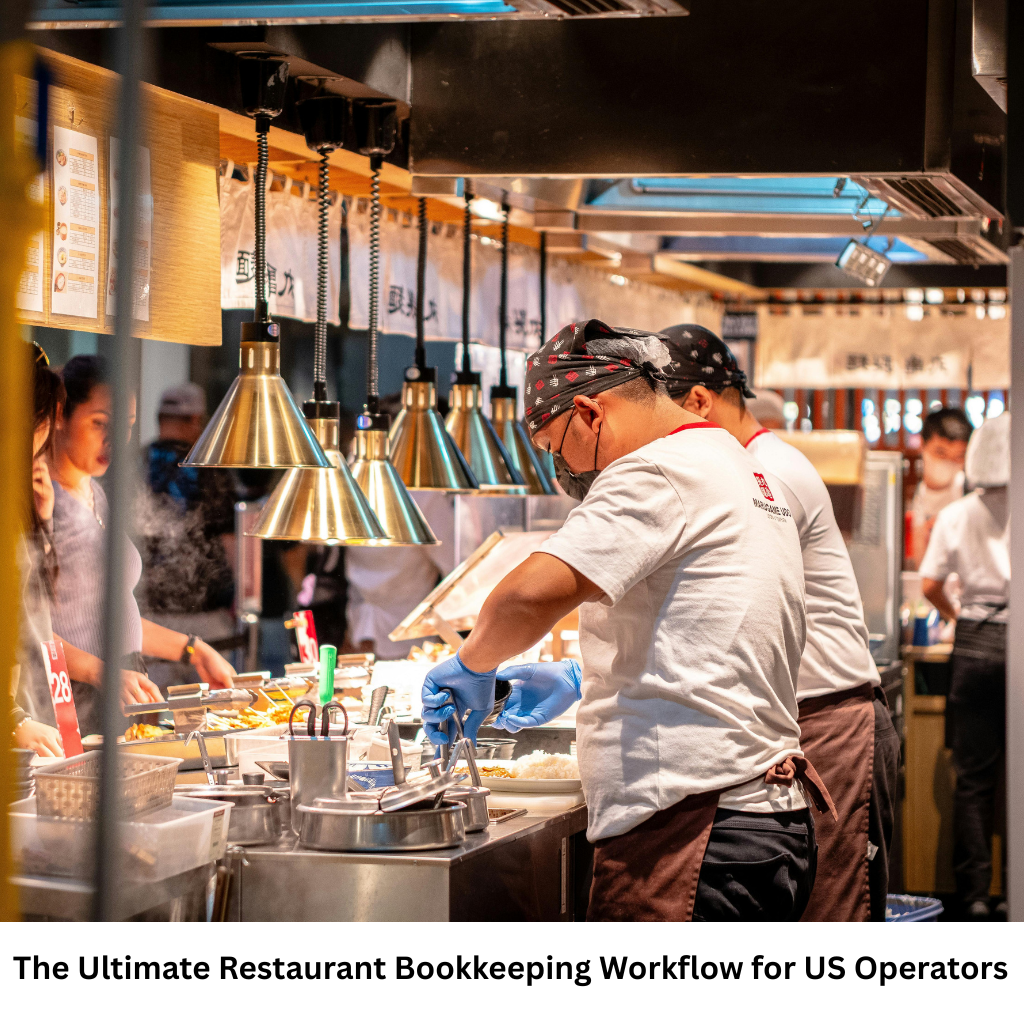
A core universal operating constraint for modern U.S. restaurants is their slim profit margin of only 3% to 5%. The traditional monthly bookkeeping model is completely unable to match the fast-paced cash flow demands of the industry, and it struggles to support stable profitability.
To address this gap, this paper develops a standardized implementation blueprint for accounting bookkeeping tailored to modern U.S. restaurants, which breaks down actionable operations along two core time dimensions: daily and weekly. Daily operations set two requirements for end-of-shift scenarios:
first, reconcile sales and deposits by comparing daily POS flash reports with actual cash reserves and batch credit card settlement data, and resolve any discrepancies immediately;
second, integrate the two mainstream POS systems, Toast and Clover, with the QuickBooks Online accounting software to enable automatic data synchronization, which maps revenue to three corresponding payment records: food, alcoholic beverages, and merchandise. The core cost metric Prime Cost is defined as the sum of cost of goods sold (COGS) and total labor costs, with a healthy threshold of less than 60% of total sales.
Two supporting weekly operations are established:
first, use the Margin Edge and Plate IQ tools to scan vendor invoices, and categorize expenses under corresponding general ledger (GL) codes such as seafood and dairy;
second, when processing payroll, separate the wages of front-of-house (FOH), back-of-house (BOH), and management staff. Weekly tracking allows for early remediation of flaws in scheduling and pricing. All operations align with the unique characteristics of the restaurant industry, contain no obscure or empty theoretical content, and can be directly implemented and replicated.
Monthly: Checking Health Metrics
For small and micro food and beverage (F&B) businesses, the core work to complete at the end of each month is financial verification and overall strategic review.
The core actionable financial tasks are sorted by accounting logic into three sequential items:
first, complete physical inventory counting with established verification standards;
second, conduct bank reconciliation adapted to the revenue collection rules for takeout orders; and
third, carry out a retrospective review of the profit and loss (P&L)
statement anchored to category-specific cost benchmarks.
Get the Bookkeeping Blueprint
_(6).jpg)


1.png)
_(5).jpg)
.jpg)
_(4).jpg)
_(1).jpg)
_(2).jpg)
.png)