 USA
USA UK
UK Australia
 UAE
UAE Canada
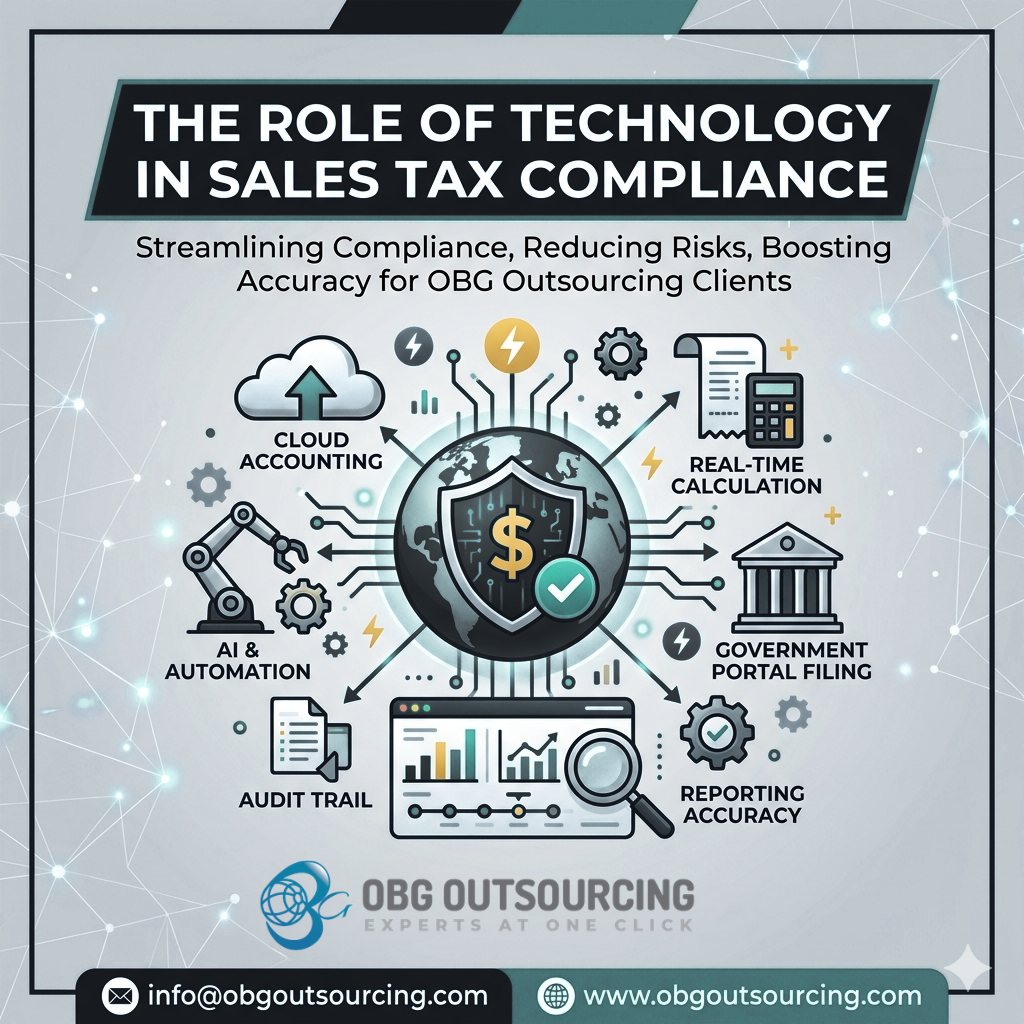
In today’s fast-moving digital economy, managing sales tax compliance has become increasingly complex for businesses of all sizes. From changing tax regulations and multi-state tax rules to international GST and VAT requirements, businesses face growing pressure to stay compliant while maintaining operational efficiency.
Technology has emerged as a game-changing solution in this evolving landscape. Modern digital tools, automation software, and cloud-based accounting systems are transforming how businesses manage sales tax obligations. Instead of relying on manual spreadsheets and time-consuming calculations, companies are now leveraging intelligent systems that improve accuracy, reduce risks, and simplify compliance processes.
At
urlOBG Outsourcinghttps://www.obgoutsourcing.com, we understand how technology-driven tax solutions help businesses adapt to changing compliance requirements while improving financial efficiency.
Understanding Sales Tax Compliance
Sales tax compliance refers to the process of collecting, calculating, reporting, and remitting taxes to the appropriate government authorities. Depending on the location and type of business, this may include:
Sales tax
Goods and Services Tax (GST)
Value Added Tax (VAT)
Use tax
Digital services tax
Compliance involves multiple responsibilities, including:
Determining correct tax rates
Tracking taxable transactions
Maintaining proper records
Filing tax returns on time
Managing audits and documentation
For growing businesses, these tasks can quickly become overwhelming without the right systems in place.
Why Traditional Tax Compliance Methods No Longer Work
Many businesses still depend on manual accounting practices, spreadsheets, and disconnected systems to manage tax compliance. While this approach may work for very small operations initially, it often creates significant challenges as businesses scale.
Common issues with manual tax management include:
Human calculation errors
Missed filing deadlines
Inconsistent reporting
Difficulty tracking multiple tax jurisdictions
Poor document organization
Increased audit risks
As tax laws continue to evolve rapidly, businesses need more agile and accurate solutions.
How Technology Is Transforming Sales Tax Compliance
1. Automation Reduces Human Errors
One of the biggest advantages of technology is automation. Modern tax software can automatically calculate applicable tax rates based on:
Customer location
Product category
Transaction type
Current tax regulations
Automated systems significantly reduce manual errors that commonly occur during data entry and tax calculations.
Businesses can process large transaction volumes with greater accuracy while minimizing compliance risks.
2. Real-Time Tax Calculation
Cloud-based tax systems allow businesses to calculate taxes in real time during customer transactions.
This is especially important for:
E-commerce businesses
SaaS companies
Multi-state retailers
International sellers
Real-time calculations ensure that businesses apply accurate tax rates instantly, even when regulations change.
3. Centralized Financial Data Management
Technology helps businesses consolidate financial and tax data into a single platform.
Integrated systems provide better visibility into:
Sales transactions
Tax liabilities
Filing deadlines
Exemptions and credits
Audit trails
This centralized approach improves operational efficiency and simplifies compliance monitoring.
4. Cloud Accounting Improves Accessibility
Cloud-based accounting software has revolutionized how businesses manage financial records.
Popular platforms such as:
urlQuickBookshttps://quickbooks.intuit.com/
urlXerohttps://www.xero.com/
urlZoho Bookshttps://www.zoho.com/books/
allow business owners and accountants to access financial data securely from anywhere.
Cloud solutions also enable:
Automatic software updates
Secure data backups
Collaboration between teams
Faster financial reporting
5. AI and Machine Learning Enhance Compliance Accuracy
Artificial Intelligence (AI) and machine learning are becoming increasingly important in tax compliance.
These technologies can:
Detect unusual transactions
Identify potential compliance risks
Predict tax liabilities
Categorize expenses automatically
Improve reporting accuracy
AI-driven systems help businesses stay proactive rather than reactive when managing compliance.
6. Automated Filing and Reporting
Modern tax compliance software can automatically generate:
Tax reports
Filing summaries
Audit documentation
Compliance alerts
Some systems can even submit tax returns directly to government portals.
This automation saves time, improves efficiency, and reduces the administrative burden on finance teams.
The Growing Importance of E-Commerce Tax Compliance
The rise of online businesses has added new complexity to sales tax compliance.
E-commerce companies often sell products across multiple regions, each with different tax rules and thresholds.
Technology helps online sellers manage:
Multi-state tax nexus
Marketplace facilitator rules
International VAT requirements
Cross-border tax calculations
Digital product taxation
Without automated systems, managing these obligations manually would be extremely difficult.
Benefits of Technology-Driven Tax Compliance
Improved Accuracy
Automated calculations reduce costly tax mistakes and reporting inconsistencies.
Time Savings
Businesses spend less time on repetitive administrative tasks.
Better Audit Preparedness
Digital systems maintain organized records and transaction histories.
Faster Decision-Making
Real-time financial data supports smarter business decisions.
Enhanced Scalability
Technology allows businesses to grow without significantly increasing compliance complexity.
Reduced Compliance Risks
Automated alerts and updated tax rules help businesses avoid penalties and late filings.
Cybersecurity and Data Protection in Tax Technology
As businesses rely more heavily on digital systems, protecting financial data becomes essential.
Businesses should prioritize:
Encrypted cloud storage
Multi-factor authentication
Secure payment gateways
Regular software updates
Employee cybersecurity training
Working with trusted accounting and outsourcing partners can further strengthen data security practices.
Choosing the Right Tax Technology Solution
Not every solution fits every business. Companies should evaluate tools based on:
Business size
Industry requirements
Geographic operations
Integration capabilities
Reporting features
Scalability
Customer support
The ideal solution should simplify compliance while supporting future business growth.
The Future of Sales Tax Compliance
Technology will continue reshaping the future of tax management.
Emerging trends include:
AI-powered compliance monitoring
Blockchain-based audit trails
Real-time government tax reporting
Predictive analytics for tax planning
Greater integration between ERP and tax systems
Businesses that adopt digital transformation early will be better positioned to adapt to future regulatory changes.
Why Businesses Are Turning to Outsourcing Partners
Many organizations are partnering with professional outsourcing firms to combine technology with expert financial management.
Outsourcing providers help businesses:
Implement automated accounting systems
Maintain tax compliance
Manage bookkeeping and reporting
Reduce operational costs
Access expert financial guidance
At, OBG Outsourcing we provide modern accounting, bookkeeping, and tax support services designed to help businesses improve compliance efficiency while focusing on growth.
Final Thoughts
Technology is no longer optional in sales tax compliance — it has become essential. Businesses that embrace automation, cloud accounting, AI-driven tools, and integrated tax systems can significantly reduce compliance risks while improving operational efficiency.
As tax regulations become increasingly complex, leveraging technology allows businesses to stay accurate, organized, and prepared for future growth. Companies that invest in modern compliance solutions today will gain a stronger competitive advantage in tomorrow’s digital economy.
_(6).jpg)


1.png)
_(5).jpg)
.jpg)
_(4).jpg)
_(1).jpg)
_(2).jpg)
.png)