 USA
USA UK
UK Australia
 UAE
UAE Canada
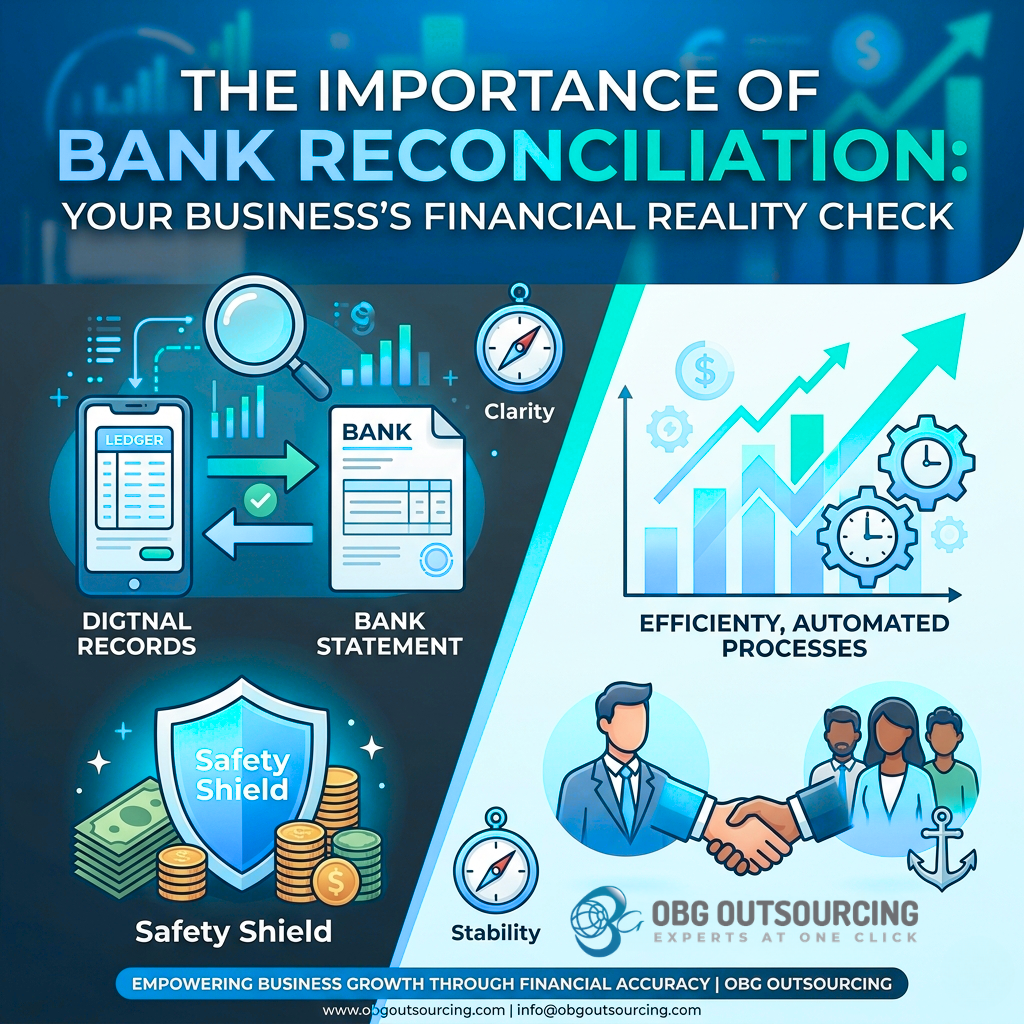
In today’s fast-moving business environment, financial clarity isn’t optional—it’s survival. Whether you’re a startup founder, a growing SME, or an established enterprise, one simple yet powerful practice can protect your financial health: bank reconciliation.
But let’s move beyond the textbook definition. Bank reconciliation isn’t just matching numbers—it’s about building trust in your data, preventing costly mistakes, and gaining real control over your cash flow.
What Is Bank Reconciliation (Really)?
At its core, bank reconciliation is the process of comparing your internal financial records with your bank statement to ensure everything aligns.
But in practice, it’s more like a financial audit checkpoint—a recurring moment where you verify:
What you think you have
Versus what you actually have
And that difference? It’s where risks—and opportunities—live.
Why Bank Reconciliation Is More Important Than Ever
1. Catches Errors Before They Snowball
Even small discrepancies—duplicate entries, missed transactions, or bank errors—can distort your financial picture. Regular reconciliation ensures these issues are identified early, before they turn into bigger problems.
2. Prevents Fraud and Unauthorized Transactions
Unusual withdrawals, unknown charges, or suspicious activity often go unnoticed without reconciliation. This process acts as an early warning system, helping businesses detect fraud quickly and take action.
3. Improves Cash Flow Visibility
Cash flow is the heartbeat of any business. Bank reconciliation gives you a real-time understanding of available funds, helping you:
- Avoid overdrafts
- Plan expenses confidently
- Make smarter financial decisions
4. Ensures Accurate Financial Reporting
Your financial statements are only as reliable as your data. Reconciliation ensures that your books reflect reality—crucial for:
Investors
Auditors
Tax authorities
5. Simplifies Tax Preparation
When your accounts are consistently reconciled, tax season becomes far less stressful. You’ll avoid last-minute chaos and reduce the risk of filing incorrect returns.
Common Causes of Discrepancies
Understanding why mismatches occur can help you prevent them:
Outstanding checks or deposits
Bank fees or interest not recorded
Data entry errors
Duplicate transactions
Timing differences between systems
The Modern Approach to Bank Reconciliation
Gone are the days of manual spreadsheets and endless cross-checking.
Today, businesses are embracing:
Automation tools for faster reconciliation
Cloud accounting systems for real-time data
Outsourced accounting services for expert oversight
This shift isn’t just about efficiency—it’s about accuracy, scalability, and peace of mind.
Why Outsourcing Bank Reconciliation Makes Sense
For many businesses, reconciliation can be time-consuming and prone to human error. That’s where outsourcing becomes a strategic advantage.
By partnering with experts like OBG Outsourcing, you can:
Ensure accurate and timely reconciliations
Free up internal resources
Reduce operational risk
Gain insights from financial professionals
Instead of treating reconciliation as a routine task, outsourcing transforms it into a value-driven process.
Best Practices for Effective Bank Reconciliation
To get the most out of your reconciliation process:
Reconcile frequently (weekly or monthly)
Use automation tools wherever possible
Maintain proper documentation
Separate duties to reduce fraud risk
Review discrepancies immediately
Consistency is key. The more regularly you reconcile, the easier and more effective the process becomes.
Final Thoughts
Bank reconciliation isn’t just an accounting task—it’s a financial safeguard. It protects your business from errors, fraud, and poor decision-making, while giving you the confidence to grow.
In a world where every financial move matters, reconciliation ensures you’re always working with the truth—not assumptions.
If you’re looking to streamline your financial processes and ensure accuracy at every level, expert support can make all the difference.
_(6).jpg)


1.png)
_(5).jpg)
.jpg)
_(4).jpg)
_(1).jpg)
_(2).jpg)
.png)