 USA
USA UK
UK Australia
 UAE
UAE Canada
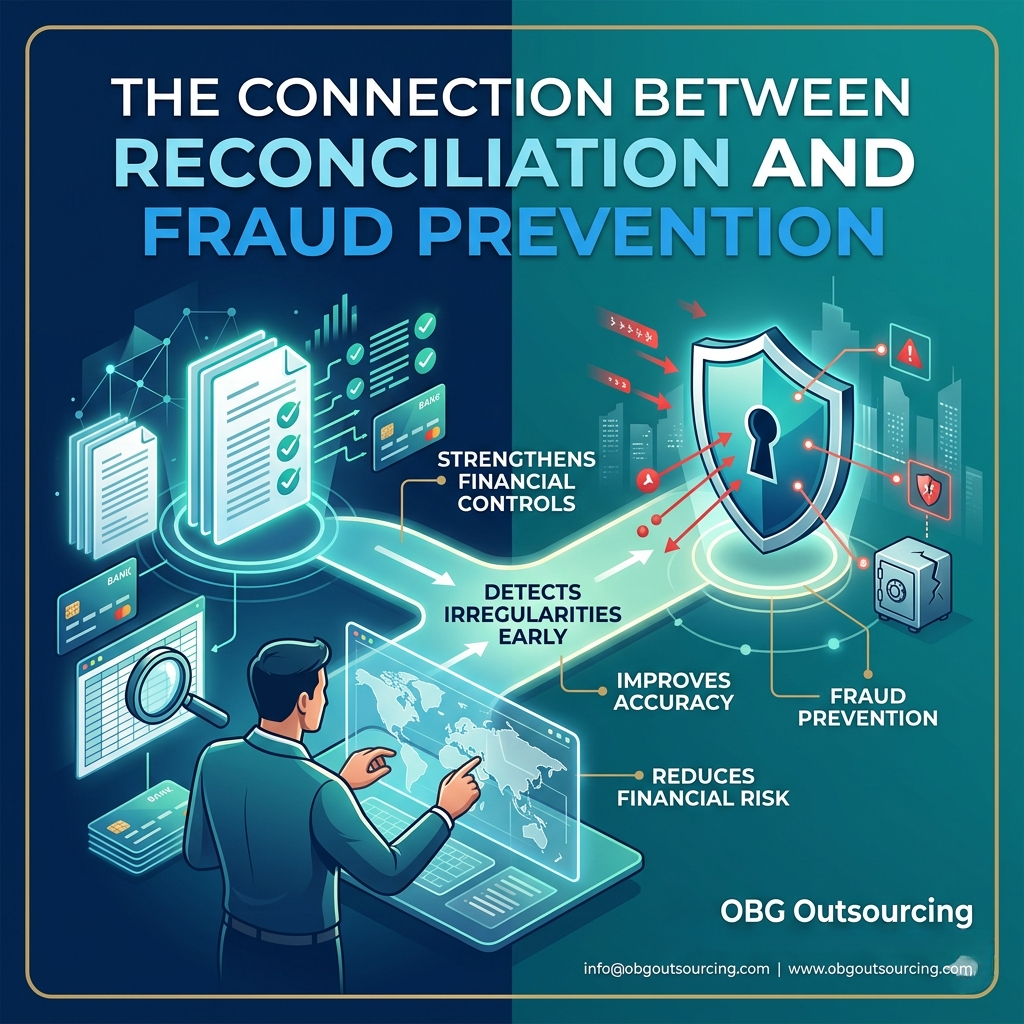
In today’s fast-moving business environment, financial fraud is becoming more sophisticated, making proactive financial oversight more important than ever. While many businesses invest heavily in cybersecurity and approval systems, one of the most powerful fraud prevention tools is often overlooked — financial reconciliation.
At OBG Outsourcing, we believe reconciliation is not just an accounting responsibility; it is a critical defense mechanism that helps businesses maintain financial accuracy, transparency, and operational trust.
Why Reconciliation Is More Than a Routine Accounting Task
Reconciliation is the process of comparing financial records with external statements and supporting documentation to ensure every transaction is accurate and properly recorded. This includes matching bank statements, invoices, payroll records, vendor payments, and client balances against internal accounting systems.
When reconciliation is performed consistently, businesses gain a clear financial picture and can quickly detect irregularities that may signal fraud, errors, or unauthorized activity.
Without proper reconciliation procedures, even small discrepancies can grow into serious financial losses over time.
The Hidden Financial Risks Businesses Face
Fraud does not always appear as large unauthorized transactions. In many cases, it starts with small inconsistencies that go unnoticed due to poor financial monitoring. Common risks include:
Duplicate vendor payments
Altered invoices
Unauthorized withdrawals
Payroll manipulation
Expense reimbursement fraud
Misapplied customer payments
Unrecorded transactions
These issues can quietly impact profitability, compliance, and business reputation if not identified early.
How Reconciliation Helps Prevent Fraud
Early Detection of Financial Irregularities
Regular reconciliation creates a system of continuous financial review. When account balances fail to match supporting records, businesses can immediately investigate the discrepancy before it becomes a larger issue.
This proactive approach helps organizations identify suspicious activities early and reduce potential losses.
Improved Internal Financial Controls
Strong reconciliation practices strengthen internal controls by introducing accountability into the financial process. When multiple checkpoints exist, it becomes significantly harder for fraudulent activities to remain hidden.
Separating responsibilities between payment approvals, bookkeeping, and reconciliation also minimizes internal risk.
Increased Transparency Across Financial Operations
Transparency is essential for financial security. Reconciliation ensures that all financial data remains accurate, organized, and verifiable. This visibility helps leadership make informed decisions while maintaining trust with clients, stakeholders, and regulatory bodies.
Better Compliance and Audit Readiness
Organizations operating in regulated industries must maintain accurate financial records to meet compliance standards. Consistent reconciliation supports audit readiness by creating detailed documentation and clear transaction histories.
For law firms, healthcare providers, and other compliance-driven businesses, reconciliation plays a major role in protecting operational integrity.
Technology and Modern Reconciliation Practices
Modern businesses are increasingly adopting cloud-based accounting systems and automated reconciliation tools to improve accuracy and efficiency. Platforms such as QuickBooks, Xero, and NetSuite help streamline financial reviews while reducing manual errors.
However, technology alone is not enough. Effective fraud prevention still requires experienced financial oversight, regular monitoring, and structured review processes.
Why Businesses Outsource Reconciliation Services
Many organizations are turning to outsourced accounting specialists to strengthen reconciliation and fraud prevention efforts. Outsourcing provides:
- Greater financial accuracy
- Reduced operational workload
- Faster discrepancy resolution
- Improved compliance support
- Access to experienced accounting professionals
- Consistent financial monitoring
At OBG Outsourcing, we help businesses establish reliable reconciliation processes that improve financial visibility and reduce risk exposure.
Final Thoughts
Fraud prevention begins with financial clarity. Reconciliation provides businesses with the oversight needed to detect inconsistencies, strengthen controls, and maintain accurate financial records.
Organizations that prioritize regular reconciliation are not only better protected against fraud but are also positioned for stronger financial management, regulatory compliance, and long-term business stability.
As financial risks continue to evolve, businesses that invest in proactive reconciliation strategies will remain one step ahead.
_(6).jpg)


1.png)
_(5).jpg)
.jpg)
_(4).jpg)
_(1).jpg)
_(2).jpg)
.png)