 USA
USA UK
UK Australia
 UAE
UAE Canada
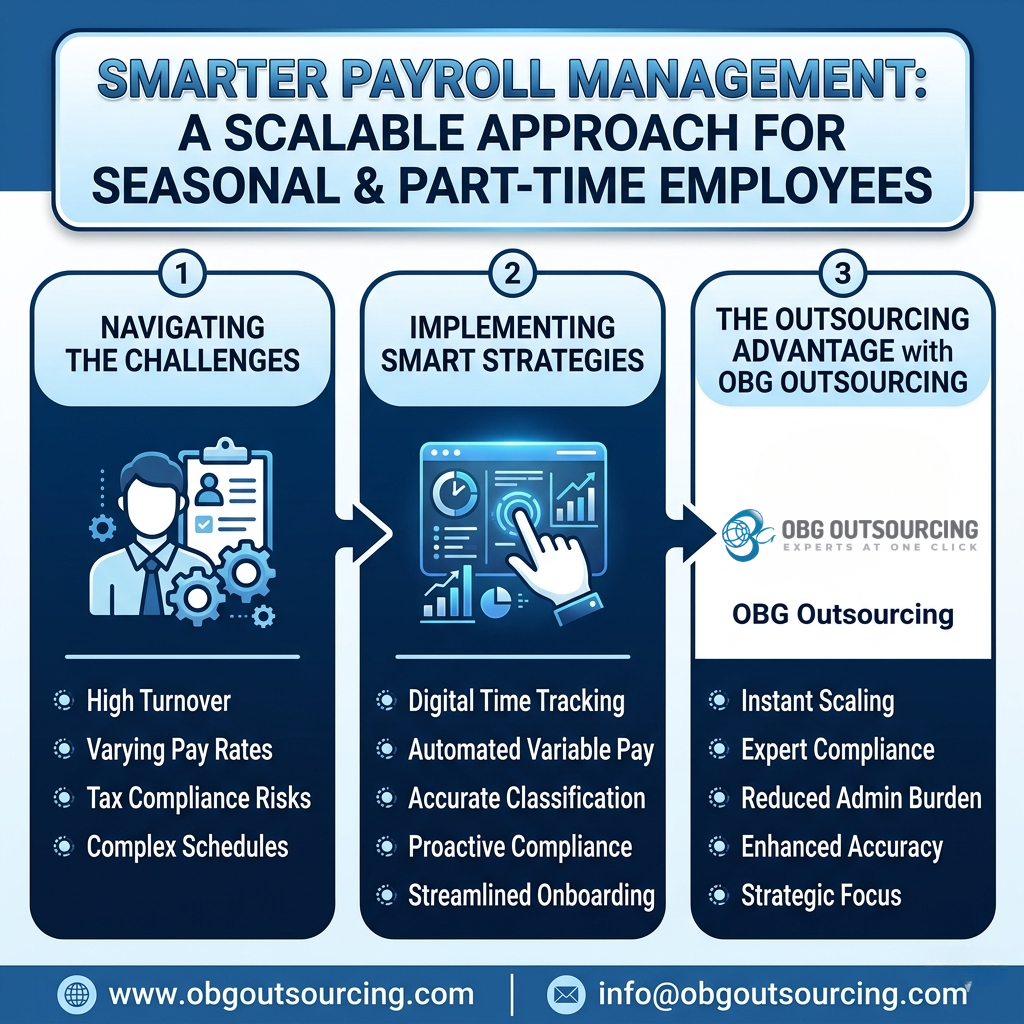
In today’s flexible workforce, seasonal peaks and part-time roles aren’t exceptions—they’re the norm. Whether you’re ramping up for holiday demand, hiring temporary staff for a project, or managing a hybrid team, payroll becomes more complex than a simple monthly process.
If not handled correctly, it can lead to compliance risks, payment errors, and frustrated employees. But with the right systems and mindset, payroll for seasonal and part-time employees can be efficient, accurate, and even strategic.
The Hidden Complexity Behind Flexible Workforces
At first glance, paying part-time or seasonal employees seems straightforward—fewer hours, smaller paychecks. In reality, it introduces multiple variables:
Fluctuating work hours
Different pay rates and contracts
Overtime eligibility variations
Tax and statutory compliance differences
High employee turnover
This constant change makes manual payroll processes prone to errors and delays.
Why Traditional Payroll Systems Fall Short
Many businesses still rely on rigid payroll systems designed for full-time, fixed-salary employees. These systems struggle when:
Employees work irregular schedules
Payroll cycles need to be adjusted quickly
Multiple locations or jurisdictions are involved
Temporary staff onboarding and offboarding happens frequently
The result? Bottlenecks, miscalculations, and compliance gaps.
Building a Modern Payroll Strategy
To manage seasonal and part-time payroll effectively, businesses need a more dynamic approach:
1. Embrace Real-Time Data Tracking
Accurate payroll starts with accurate time tracking. Digital tools that sync attendance, shifts, and hours worked eliminate guesswork and reduce disputes.
2. Automate Variable Pay Calculations
From overtime to holiday pay, automation ensures every rule is applied consistently—no matter how complex the schedule.
3. Standardize Employee Classification
Misclassifying workers (part-time vs. contractor vs. seasonal) can lead to penalties. Clear definitions and documentation are essential.
4. Stay Ahead of Compliance
Different regions have different labor laws for part-time and temporary workers. Keeping up manually is risky—systems and expert oversight make a difference.
5. Simplify Onboarding and Exit Processes
Seasonal hiring often involves onboarding large numbers of employees quickly. Streamlined digital processes ensure they are paid correctly from day one—and exited cleanly.
The Role of Outsourcing in Simplifying Payroll
This is where outsourcing becomes more than a cost-saving tactic—it becomes a performance upgrade.
By partnering with a specialized payroll provider like OBG Outsourcing, businesses can:
Scale payroll operations instantly during peak seasons
Ensure compliance with evolving labor laws
Reduce administrative burden on internal teams
Improve accuracy and turnaround time
Access expert support without expanding in-house staff
Outsourcing allows your internal team to focus on growth while experts handle the complexity behind the scenes.
Turning Payroll into a Strategic Advantage
Efficient payroll isn’t just about paying employees on time—it shapes employee experience and business agility.
When seasonal and part-time workers are paid accurately and promptly:
Trust increases
Retention improves (even for temporary roles)
Operational disruptions decrease
Your brand reputation strengthens
In competitive markets, even short-term employees expect a seamless experience—and payroll is a big part of that.
Final Thoughts
Managing payroll for seasonal and part-time employees doesn’t have to be chaotic. With the right combination of technology, process, and expert support, it becomes streamlined and scalable.
Businesses that rethink payroll as a flexible, intelligent system—not a static function—gain a clear advantage in today’s fast-moving workforce landscape.
_(6).jpg)


1.png)
_(5).jpg)
.jpg)
_(4).jpg)
_(1).jpg)
_(2).jpg)
.png)