 USA
USA UK
UK Australia
 UAE
UAE Canada
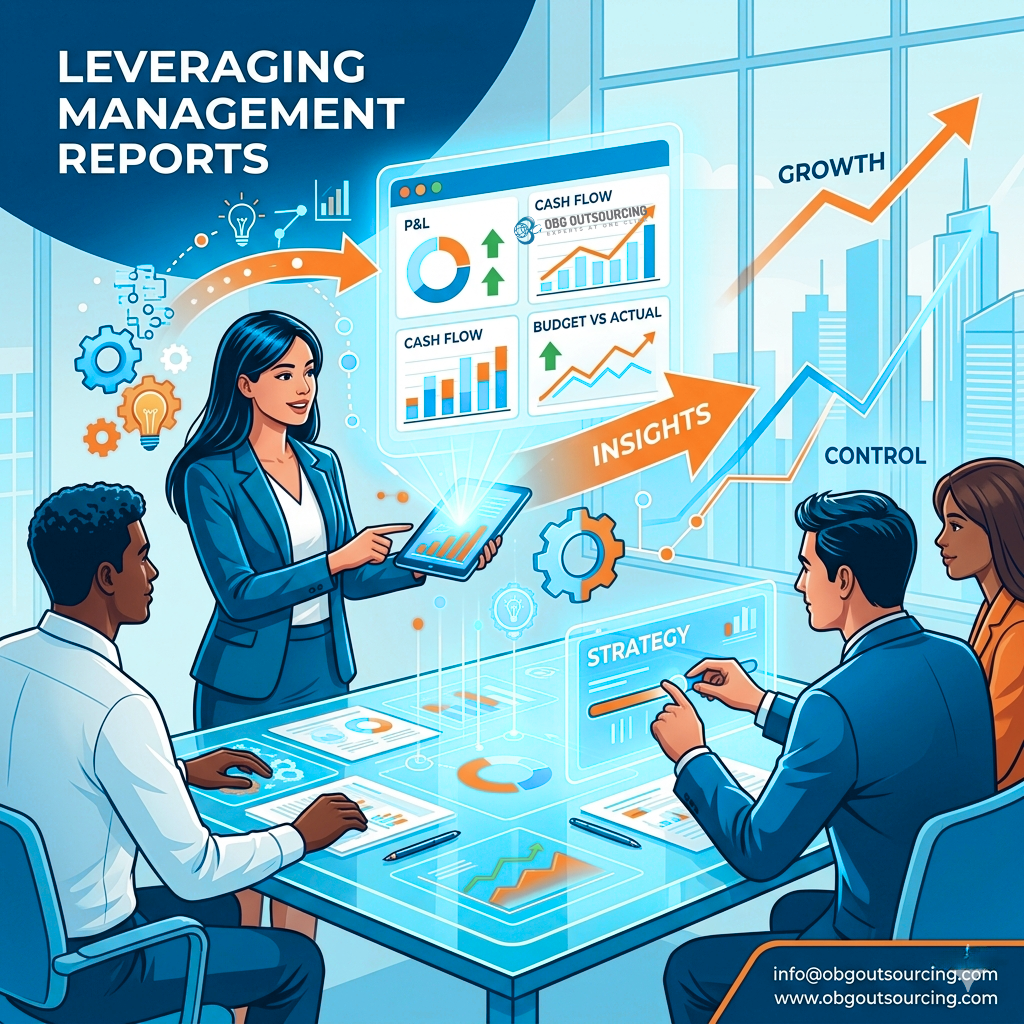
In today’s fast-moving business environment, financial success isn’t just about how much you earn—it’s about how well you understand and control your numbers. That’s where management reports come in. When used effectively, they transform raw data into clear, actionable insights that help you make smarter, faster decisions.
What Are Management Reports—and Why Do They Matter?
Management reports are structured summaries of your financial and operational data. Unlike standard financial statements, they are designed specifically for decision-making. They give you a real-time snapshot of performance, helping you answer critical questions like:
Are we actually profitable right now?
Where is our cash going?
Which areas of the business need immediate attention?
Instead of reacting to problems after they occur, management reports allow you to stay ahead.
Turning Data Into Direction
Many businesses collect data—but few truly use it. The difference lies in how you interpret and apply that information. Effective management reporting turns numbers into direction by:
Highlighting trends over time
Identifying inefficiencies and cost leaks
Comparing actual performance vs. budget
Providing clarity on cash flow movements
This level of insight empowers business owners to move from guesswork to strategy.
Key Reports That Drive Financial Control
To build strong financial control, focus on a core set of reports that give you a complete picture:
1. Profit & Loss (P&L) Report
Shows your revenue, costs, and overall profitability. It helps you understand whether your business model is sustainable.
2. Cash Flow Report
Tracks how cash moves in and out of your business. This is essential for maintaining liquidity and avoiding shortfalls.
3. Budget vs. Actual Report
Compares planned financial goals with real performance, helping you stay aligned with your strategy.
4. Accounts Receivable & Payable Reports
Provide visibility into what’s owed to you and what you owe—critical for managing working capital.
Modern Businesses Need Real-Time Insights
Monthly reports are no longer enough. In a digital-first world, businesses need timely, accurate insights to stay competitive. Cloud-based tools and automated systems now make it possible to:
Access financial data anytime, anywhere
Generate real-time dashboards
Reduce manual errors
Improve collaboration between teams
The result? Faster decisions and stronger financial control.
Common Mistakes to Avoid
Even with the right reports, businesses can fall into common traps:
Ignoring the data: Reports are only valuable if reviewed regularly
Overcomplicating reports: Too much data can create confusion
Lack of consistency: Irregular reporting leads to blind spots
No action plan: Insights without action don’t create value
The key is to keep reports simple, consistent, and actionable.
How Outsourcing Can Strengthen Reporting
Not every business has the time or expertise to build robust reporting systems internally. That’s where outsourcing can make a difference. A professional partner can:
Customize reports based on your business needs
Ensure accuracy and compliance
Provide expert analysis and recommendations
Save time and reduce operational costs
With the right support, your reports become more than just numbers—they become a strategic advantage.
Final Thoughts
Financial control isn’t about restricting growth—it’s about enabling it. By leveraging management reports effectively, you gain clarity, confidence, and control over your business decisions.
When you understand your numbers, you don’t just run your business—you lead it.
_(6).jpg)


1.png)
_(5).jpg)
.jpg)
_(4).jpg)
_(1).jpg)
_(2).jpg)
.png)