 USA
USA UK
UK Australia
 UAE
UAE Canada
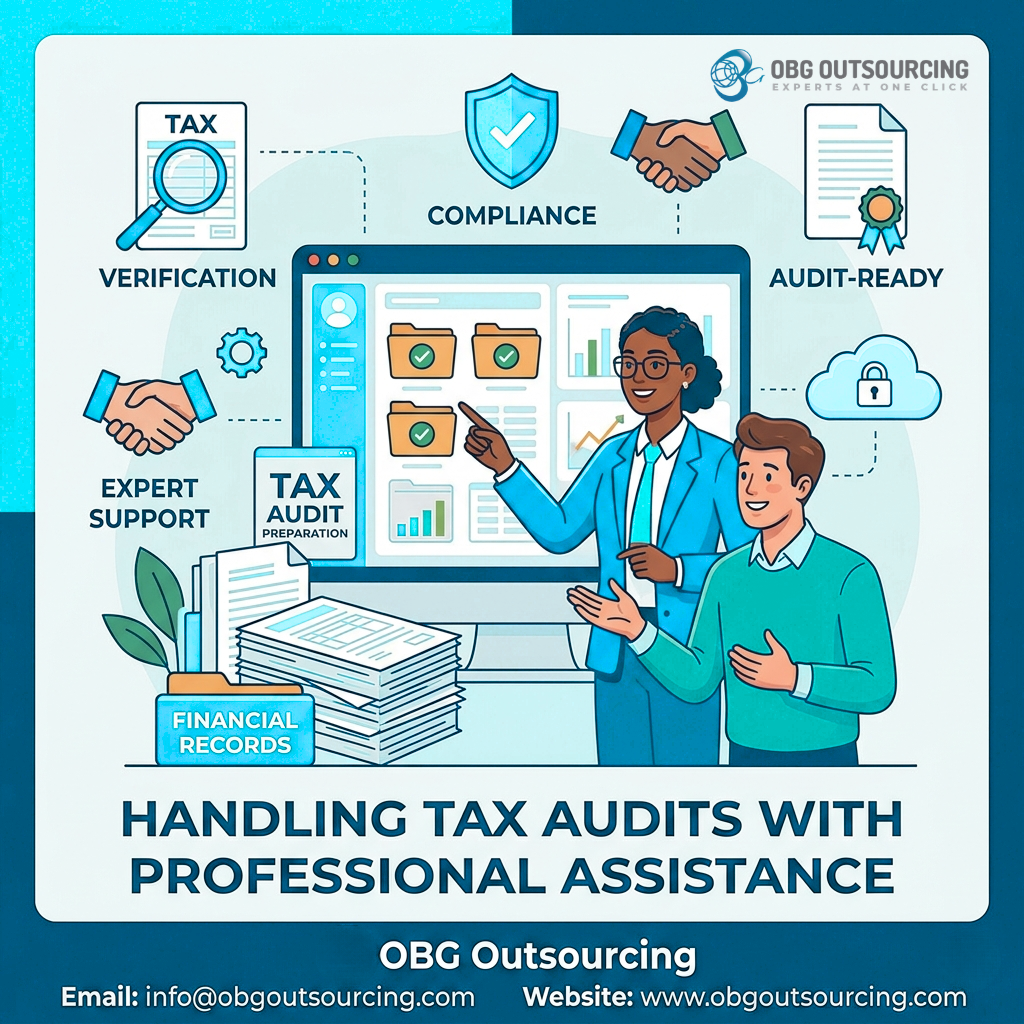
Tax audits are one of the most stressful experiences businesses can face. Even well-managed companies may encounter audits due to routine compliance checks, reporting inconsistencies, or evolving tax regulations. The good news is that a tax audit does not have to disrupt your business operations or create unnecessary panic — especially when you have professional assistance guiding the process.
At OBG Outsourcing, we believe that preparation, transparency, and expert financial support are the keys to navigating audits successfully. Businesses that approach audits strategically often emerge with stronger financial systems and improved compliance practices.
Understanding What a Tax Audit Really Means
A tax audit is essentially a review conducted by tax authorities to verify whether a business has reported its financial information accurately. Audits may involve:
Income verification
Expense validation
Payroll reviews
GST/VAT checks
Financial statement examination
Vendor and transaction analysis
Contrary to popular belief, audits are not always triggered by wrongdoing. Sometimes, businesses are selected randomly or because of industry-specific compliance requirements.
Why Businesses Struggle During Tax Audits
Many organizations face difficulties during audits because their financial records are incomplete, poorly organized, or inconsistent across departments. Common issues include:
Missing invoices or receipts
Incorrect tax calculations
Delayed bookkeeping
Unreconciled bank statements
Misclassified business expenses
Lack of supporting documentation
These small accounting gaps can quickly become major compliance concerns during an audit.
The Importance of Professional Assistance
Professional audit support significantly reduces the pressure on business owners and finance teams. Experienced accounting professionals understand audit procedures, compliance standards, and documentation requirements.
Working with experts helps businesses:
Respond accurately to audit requests
Organize financial records efficiently
Reduce the risk of penalties
Improve communication with tax authorities
Maintain operational continuity during the audit process
Professional guidance also ensures that businesses avoid making emotional or rushed decisions that could complicate the situation further.
Step 1: Organize Financial Documentation
The first step in handling any tax audit is collecting and organizing all financial records. This includes:
Tax returns
Profit and loss statements
Balance sheets
Payroll records
Vendor invoices
Bank statements
Expense receipts
Contracts and agreements
A professional bookkeeping or accounting partner can streamline this process by preparing clean and audit-ready documentation.
Step 2: Review Records Before Submission
Never submit documents to auditors without first reviewing them internally or with professional advisors.
Experts can help identify:
Reporting inconsistencies
Duplicate entries
Missing documentation
Potential compliance risks
Errors requiring clarification
This proactive review minimizes surprises during the audit process.
Step 3: Maintain Clear Communication
One of the biggest mistakes businesses make during audits is inconsistent communication. Providing incomplete answers or unnecessary information can create confusion.
Professional tax consultants act as intermediaries between businesses and tax authorities, helping ensure:
Accurate responses
Timely submissions
Professional communication
Reduced misunderstandings
Having experts manage communication also helps business owners stay focused on daily operations.
Step 4: Understand Your Rights and Responsibilities
Every business undergoing an audit has certain rights, including:
The right to request clarification
The right to professional representation
The right to dispute findings if necessary
The right to confidentiality
At the same time, businesses are responsible for providing accurate and timely information. Professional advisors help maintain this balance effectively.
Step 5: Strengthen Internal Financial Processes
A tax audit should not only be viewed as a compliance event — it can also reveal operational weaknesses within your financial systems.
After the audit, businesses should evaluate:
Bookkeeping accuracy
Expense tracking systems
Payroll compliance
Tax filing procedures
Internal financial controls
Many organizations use audits as an opportunity to modernize their accounting systems and improve long-term compliance.
How Outsourcing Can Reduce Future Audit Risks
Outsourced accounting and bookkeeping services help businesses maintain cleaner financial records throughout the year. This reduces the likelihood of errors that may trigger audits in the future.
Benefits of outsourcing include:
Real-time financial reporting
Consistent bookkeeping practices
Improved compliance monitoring
Better document management
Reduced administrative burden
Access to experienced accounting professionals
With expert oversight, businesses can remain audit-ready year-round rather than scrambling during tax season.
Technology Plays a Major Role
Modern accounting software and cloud-based financial systems have transformed audit preparation. Digital tools help businesses:
Store records securely
Automate transaction tracking
Generate financial reports instantly
Improve accuracy
Simplify document retrieval
Combining technology with professional accounting expertise creates a much stronger compliance framework.
Final Thoughts
Tax audits may feel intimidating, but they can be managed successfully with preparation and professional support. Businesses that maintain organized records, follow compliance standards, and seek expert assistance are far better positioned to navigate audits confidently.
Professional audit support is not just about resolving problems — it is about protecting your business reputation, improving financial transparency, and building long-term operational stability.
At OBG Outsourcing, we help businesses simplify accounting, strengthen compliance, and prepare confidently for audits with reliable financial outsourcing solutions.
_(6).jpg)


1.png)
_(5).jpg)
.jpg)
_(4).jpg)
_(1).jpg)
_(2).jpg)
.png)