 USA
USA UK
UK Australia
 UAE
UAE Canada
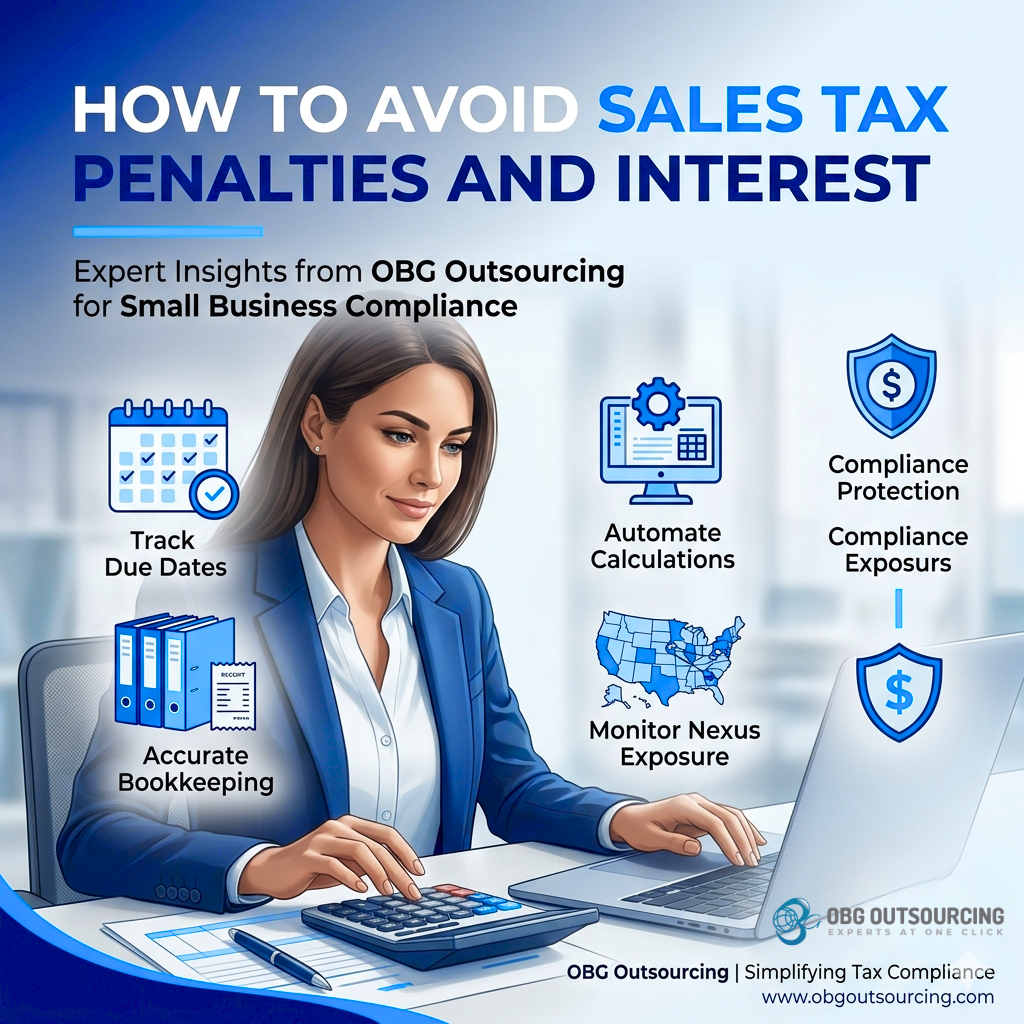
Running a business already comes with enough financial pressure — the last thing any business owner wants is unexpected sales tax penalties and mounting interest charges. Yet many companies, especially growing small businesses, struggle with sales tax compliance because regulations vary by state, filing deadlines can be confusing, and minor reporting errors can quickly become expensive problems.
The good news is that most sales tax penalties are preventable with the right systems, planning, and financial oversight.
At OBG Outsourcing, we help businesses simplify tax compliance and avoid costly financial mistakes before they affect profitability.
Why Sales Tax Penalties Happen
Sales tax penalties are usually triggered when businesses:
File returns late
Miss payment deadlines
Underreport taxable sales
Apply incorrect tax rates
Fail to register in required states
Keep inaccurate records
Even small filing errors can result in:
Interest accumulation
Late filing penalties
Audits
State notices
Business cash-flow disruptions
For businesses operating in multiple states, compliance becomes even more challenging due to changing nexus laws and varying tax regulations.
The Hidden Cost of Sales Tax Mistakes
Many business owners underestimate how quickly penalties grow. Interest compounds over time, and repeated compliance issues may trigger stricter state monitoring or audits.
Some common financial impacts include:
Reduced business cash flow
Unexpected tax liabilities
Administrative stress
Legal complications
Damaged business credibility
For growing businesses, these issues can create operational setbacks that are difficult to recover from.
1. Know Your Filing Deadlines
One of the simplest ways to avoid penalties is staying ahead of filing due dates.
Depending on your business activity, states may require:
Monthly filings
Quarterly filings
Annual filings
Missing even one deadline can trigger automatic penalties.
Best Practice:
Create a dedicated tax calendar with:
Filing deadlines
Payment due dates
Reporting requirements
State-specific obligations
Automated accounting systems can also send reminders before due dates arrive.
2. Maintain Accurate Financial Records
Poor bookkeeping is one of the leading causes of tax reporting errors.
Accurate records should include:
Sales invoices
Exemption certificates
Customer transactions
Tax collected
Vendor payments
State tax reports
Organized records make it easier to:
File correctly
Respond to audits
Reconcile discrepancies
Reduce reporting errors
Professional bookkeeping support can significantly reduce compliance risks.
3. Register in States Where You Have Nexus
Many businesses unknowingly create “sales tax nexus” in multiple states through:
Online sales
Remote employees
Warehousing
Economic thresholds
If your business has nexus in a state and you fail to register, penalties can become substantial.
Common Nexus Triggers:
Exceeding sales thresholds
High transaction volume
Physical presence
Marketplace sales activity
Monitoring nexus exposure is essential for eCommerce and service-based businesses expanding into new markets.
4. Automate Sales Tax Calculations
Manual tax calculations increase the risk of:
Incorrect tax rates
Filing errors
Missing jurisdiction updates
Sales tax software can help businesses:
Calculate accurate rates
Track multi-state obligations
Generate reports
Reduce human error
Automation becomes especially valuable as businesses scale operations.
5. Separate Sales Tax Funds
A common mistake businesses make is treating collected sales tax as operating cash.
Remember:
Sales tax collected belongs to the state — not the business.
Using those funds for expenses can create major cash-flow problems when payment deadlines arrive.
Smart Strategy:
Move collected tax amounts into a separate account immediately after receiving payments.
This helps ensure funds are available when taxes are due.
6. Review Taxability Rules Carefully
Not all products and services are taxed the same way.
Some states exempt:
Certain digital products
Professional services
Nonprofit transactions
Resale purchases
Charging incorrect tax rates may lead to:
Customer disputes
Refund obligations
State penalties
Regular reviews of taxability rules can help businesses stay compliant as regulations evolve.
7. Conduct Internal Compliance Reviews
Routine internal reviews help identify issues before states do.
Review:
Tax filings
Sales reports
Exemption certificates
State registrations
Filing frequencies
Quarterly reviews are often enough to catch small problems early.
8. Respond Quickly to State Notices
Ignoring tax notices is one of the worst mistakes a business can make.
Even minor notices should be reviewed immediately because:
Interest continues accruing
Penalties may increase
Audits can escalate
Fast action often leads to easier resolution and lower overall costs.
9. Work With Experienced Accounting Professionals
Sales tax regulations are constantly changing, especially for online and multi-state businesses.
Professional accounting support can help:
Monitor compliance
Prepare accurate filings
Reduce audit risks
Identify tax savings opportunities
Prevent costly penalties
Outsourcing accounting functions also allows business owners to focus more on growth instead of administrative complexity.
How OBG Outsourcing Helps Businesses Stay Compliant
At OBG Outsourcing, we provide customized accounting and bookkeeping solutions designed to help businesses reduce compliance risks and improve financial accuracy.
Our services support:
Sales tax management
Bookkeeping
Payroll processing
Financial reporting
Tax preparation support
Outsourced accounting operations
We help businesses create efficient systems that reduce errors, improve reporting, and keep tax obligations organized year-round.
Final Thoughts
Sales tax penalties and interest can quietly drain business profits if compliance is not managed properly. The key to avoiding these issues is proactive financial management, organized bookkeeping, timely filing, and accurate reporting.
Businesses that invest in proper accounting systems and professional support are far better positioned to avoid costly mistakes and maintain long-term financial stability.
For companies looking to simplify compliance and strengthen financial operations, partnering with experienced professionals can make all the difference.
_(6).jpg)


1.png)
_(5).jpg)
.jpg)
_(4).jpg)
_(1).jpg)
_(2).jpg)
.png)