 USA
USA UK
UK Australia
 UAE
UAE Canada
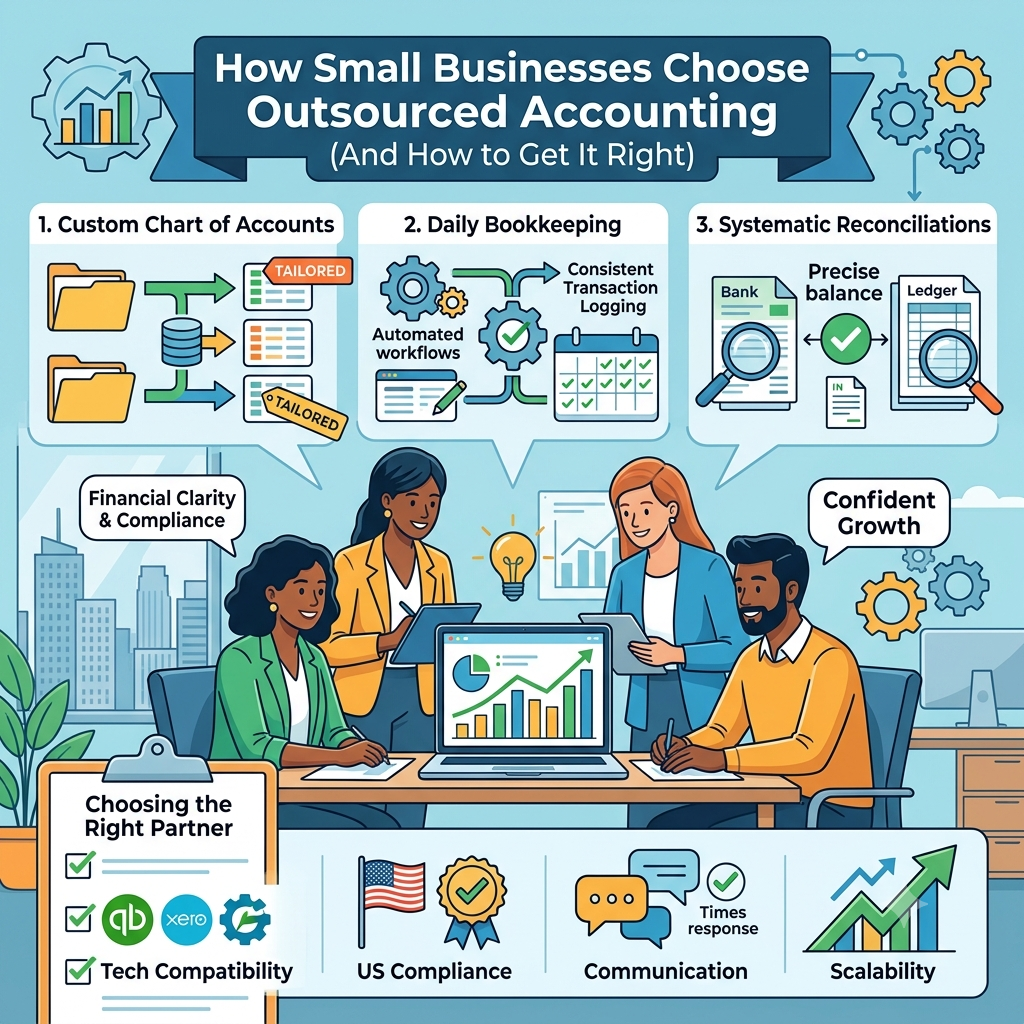
Most people who start small businesses pool their money to set up their stalls and launch their ventures, with no initial intention of spending every day staring at account books, calculating income and expenses, and sorting out cash flow. But as their businesses grow larger, the processes they need to roll out and the orders they need to fulfill keep increasing, and the incoming and outgoing funds tied up in their hands also rise accordingly. The accounts that were once easy to sort out with a few casual jottings gradually turn into a tangled mess. At this point, clear and orderly financial data becomes a true watershed. On one side of this divide, business owners can use reliable figures to confidently expand their scale and develop their business, growing their operations steadily; on the other side, they have to spend every day scrambling to put out fires—failing to cover gaps in incoming funds one moment, reconciling mismatched expenditures the next, constantly dealing with all sorts of sudden financial messes, with no time left to push their business forward.
When you finally decide to seek outsourced accounting services to untangle this messy set of books, what you need is far more than just someone to balance the accounts and line up the numbers. You need to find a reliable long-term partner who can not only sort out your company's financial situation in full detail, accounting for where every dollar is spent and where every dollar comes from, but also keep track of all requirements to ensure all your operations comply with regulations, so you never cross the red line of financial rules. More importantly, this partner can free you from the endless trivial tasks of sorting through invoices and reconciling cash flow, letting you focus all your energy on the actual work of running your business.
What follows is an explanation of how successful small businesses in the US evaluate outsourced bookkeeping and accounting service providers to lay a solid financial foundation for themselves.
A Custom Chart of Accounts Setup
If a company's financial structure is in complete disarray, all business and finance-related analyses simply cannot be conducted. It becomes impossible to even get a clear grasp of the company's assets and judge whether the business is profitable, let alone use data to plan for the future.
Top US accounting service providers will never finish their work by haphazardly slotting every single payment and receipt of your company into a generic set of accounting categories that everyone uses, like many shoddy small firms do. They will specifically adjust the settings of your chart of accounts, building this core financial ledger framework to perfectly fit the unique circumstances of your company — it must not only align with how you specifically run your business and what revenue streams you rely on, but also meet all the specialized requirements for your tax filing.
So what traits should you look out for when choosing such a service provider? You need to find an agency that, before touching any of your company's account books or even recording the first transaction, will press to clarify every single detail. They must thoroughly ask about all the financial details tied to the lifeline of your business — what your sales channels are, what your cost of goods sold (COGS) is, and where all your daily operating expenses are spent — before they start building your financial framework.
Consistency in Daily Bookkeeping
The worst thing about managing finances is failing to record money inflows and outflows in a timely manner. If every single revenue and expenditure is put off and not recorded on the same day it occurs, your financial records will become a complete mess within just a few days. Not only will you be unable to trace the source and destination of every sum of money, but you will even mix up which payments you need to make and which payments you are owed.
Conversely, if you can stick to keeping your accounts every day, the situation will be completely different — you can fully grasp your cash flow status at any time. You will have a clear understanding of where every cent comes from and where it goes. You will never miss the payment deadline for your suppliers, and you will never fail to keep track of the payment invoices you send to your clients. All matters related to money will be firmly under your control.
If you plan to choose an accounting tool or an accounting service, you must focus on three essential factors when making your selection: first, there must be a dedicated support team that can help you solve any problems you encounter at any time; second, there must be an automated data entry process that eliminates the need for you to manually input every single inflow and outflow record one by one; third, there must be clear, public daily and weekly accounting records, with all accounts for each period sorted out thoroughly. Never choose a service or tool that does not organize records regularly, and only scrambles to piece together accounts at the last minute right before the end of the month.
Systematic Account Reconciliations
Bank statements, records from your merchant payment collection platform, and the internal books your company keeps on its own—these three sets of accounts do not match. Hidden within this muddled set of books, there is likely silent capital outflow, or errors made during bookkeeping that you would never otherwise detect.
Reconcile all your accounts carefully every single month, tracking every cent of incoming and outgoing funds—every revenue and expense entry in your books must match exactly the actual bank transactions, with zero errors or omissions allowed.
If you need to carry out account reconciliation, what kind of service should you choose? You need one with a rigorous, multi-layered review process that can automatically flag three common types of issues: duplicate entries where the same revenue or expense is recorded twice, accidentally lost receipts for income and expenditures, and unrecorded bank service fees that were deducted.
How to Select the Right Partner
If you plan to hire a third-party service provider to handle accounting-related matters for your small business, during the stage of evaluating different providers, you must ask the following Key Questions:
Evaluation Metric Key Questions
Tech Stack Compatibility Can they integrate seamlessly with the existing software you are currently using? Such as QuickBooks, Xero, Gusto, Stripe.
US Compliance Do their bookkeeping processes comply with GAAP standards and US tax regulations?
Communication and Service Level Agreement Will you be assigned a dedicated point of contact? What is their promised response time?
Scalability When your company grows, can they scale up from basic bookkeeping to providing more advanced services such as complex financial reports?
Ready for Dependable Financial Support
Stop wasting your valuable time tangled in chaotic spreadsheets, endlessly reconciling and sorting through messy tables that drain the energy you should be devoting to your core business. Our team provides reliable, comprehensive outsourced accounting services—we handle everything from the initial setup of your accounting system to the daily maintenance of every single entry. You can rest assured focusing all your energy on growing your company’s business, with no need to worry about financial matters at all.
_(6).jpg)


1.png)
_(5).jpg)
.jpg)
_(4).jpg)
_(1).jpg)
_(2).jpg)
.png)