 USA
USA UK
UK Australia
 UAE
UAE Canada
In today’s fast-moving business environment, tax is no longer just a once-a-year obligation—it’s a strategic opportunity. Businesses and individuals who treat tax planning as a proactive process, rather than a last-minute task, often unlock significant savings and stronger financial control.
At its core, effective tax planning is about legally minimizing your tax liability while aligning with your financial goals. Done right, it doesn’t just reduce your tax bill—it improves cash flow, supports growth, and enhances long-term stability.
Why Tax Planning Matters More Than Ever
With evolving regulations, digital compliance systems, and increasing scrutiny from tax authorities, reactive tax filing is no longer enough. Modern businesses need a forward-looking approach that anticipates liabilities and identifies opportunities before deadlines arrive.
Effective tax planning allows you to:
Retain more of your earnings
Avoid penalties and compliance risks
Improve financial forecasting
Make smarter investment decisions
Key Strategies to Reduce Your Tax Bill
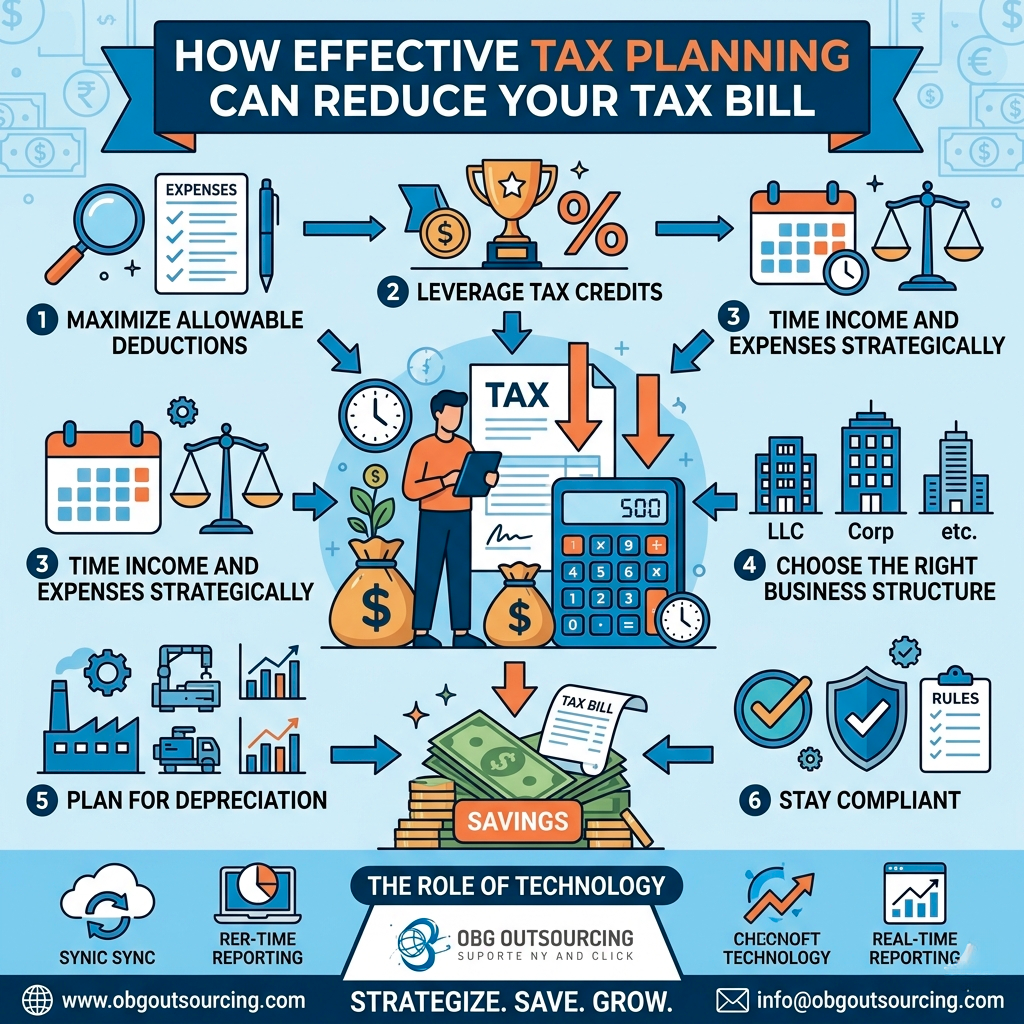
1. Maximize Allowable Deductions
Many businesses miss out on deductions simply due to lack of awareness or poor record-keeping. Expenses such as operational costs, employee benefits, depreciation, and professional fees can significantly lower taxable income when properly documented.
2. Leverage Tax Credits
Unlike deductions, tax credits directly reduce the amount of tax you owe. Identifying applicable credits—whether for investments, exports, innovation, or sustainability—can result in substantial savings.
3. Time Your Income and Expenses Strategically
Timing plays a critical role in tax planning. Deferring income or accelerating expenses (where legally permitted) can shift tax liabilities to more favorable periods, improving short-term cash flow.
4. Choose the Right Business Structure
Your entity type impacts how you are taxed. Whether operating as a sole proprietor, partnership, or corporation, the structure should align with your revenue model and long-term plans to optimize tax efficiency.
5. Plan for Depreciation and Capital Investments
Investing in assets such as equipment or technology can offer depreciation benefits over time. Strategic planning ensures you maximize these advantages without disrupting your cash reserves.
6. Stay Compliant with Changing Regulations
Tax laws are constantly evolving. Staying updated ensures you take advantage of new benefits while avoiding costly penalties due to non-compliance.
The Role of Technology in Modern Tax Planning
Digital tools and cloud accounting systems have transformed tax management. Real-time tracking, automated reporting, and data analytics allow businesses to monitor their tax position throughout the year—not just at filing time.
This shift enables:
Faster decision-making
Greater accuracy
Reduced manual errors
- Better audit readiness
Common Mistakes to Avoid
Even well-intentioned businesses can fall into these traps:
Waiting until year-end to plan taxes
Mixing personal and business finances
Ignoring documentation and record-keeping
Overlooking small but cumulative deductions
Relying solely on outdated tax strategies
Avoiding these mistakes can make a measurable difference in your final tax liability.
A Smarter Approach to Tax Efficiency
Effective tax planning is not about aggressive tactics—it’s about informed, strategic decisions made consistently throughout the year. Businesses that adopt this mindset gain a competitive edge by preserving capital and reinvesting it into growth.
At OBG Outsourcing, we believe tax planning should be simple, transparent, and aligned with your business goals. With the right guidance, reducing your tax bill becomes less about stress—and more about strategy.
_(6).jpg)


1.png)
_(5).jpg)
.jpg)
_(4).jpg)
_(1).jpg)
_(2).jpg)
.png)