 USA
USA UK
UK Australia
 UAE
UAE Canada
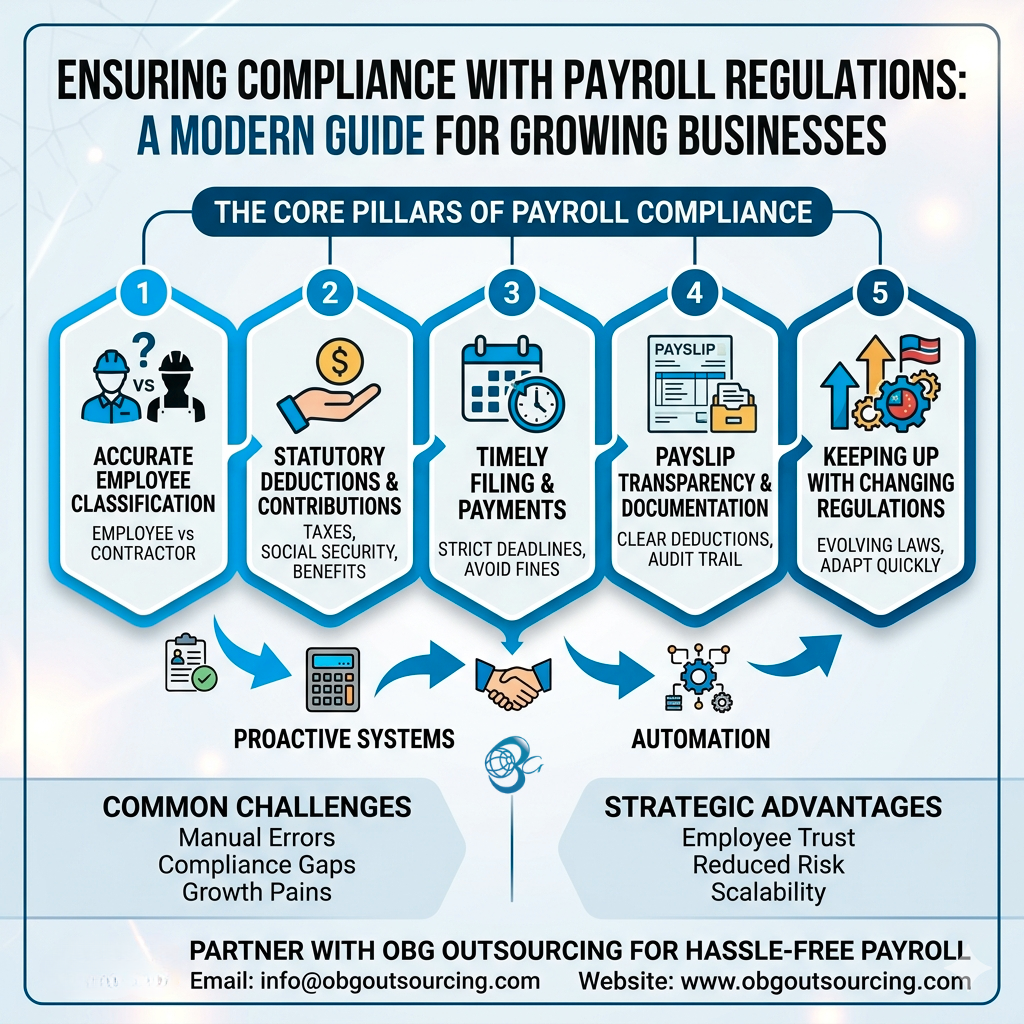
Payroll today is no longer just a back-office function—it sits at the intersection of compliance, employee trust, and financial accuracy. For growing businesses, especially in dynamic regulatory environments, ensuring payroll compliance is essential not just to avoid penalties, but to build a reliable and scalable operation.
Why Payroll Compliance Matters More Than Ever
Regulatory frameworks are becoming increasingly stringent, and even small errors in payroll can trigger audits, fines, or reputational damage. But beyond the legal risks, payroll compliance directly impacts employee satisfaction. Late salaries, incorrect deductions, or inconsistent payslips can erode trust quickly.
A compliant payroll system ensures:
Timely and accurate salary disbursement
Proper tax deductions and filings
Adherence to labor laws and statutory requirements
Transparent and auditable financial records
The Core Pillars of Payroll Compliance
1. Accurate Employee Classification
Misclassifying employees as independent contractors (or vice versa) can lead to serious compliance issues. Each category comes with different tax treatments, benefits, and reporting requirements. Getting this wrong is one of the most common—and costly—mistakes.
2. Statutory Deductions and Contributions
Payroll compliance involves correctly calculating and remitting statutory deductions such as:
Income tax withholdings
Social security contributions
Retirement benefits
Local labor welfare contributions
Errors in these calculations can accumulate quickly and lead to penalties or legal scrutiny.
3. Timely Filing and Payments
Compliance isn’t just about accuracy—it’s about timing. Regulatory bodies impose strict deadlines for filings and payments. Missing these deadlines can result in interest charges and fines, even if the calculations are correct.
4. Payslip Transparency and Documentation
Providing clear and compliant payslips is not optional. Employees should be able to understand:
Gross vs net salary
Deductions and contributions
Bonuses, incentives, and reimbursements
Maintaining proper payroll records is equally important for audits and future reference.
5. Keeping Up with Changing Regulations
Payroll laws evolve frequently. Updates in tax slabs, contribution limits, or compliance requirements can impact your payroll process overnight. Businesses need systems in place to stay updated and adapt quickly.
Common Payroll Compliance Challenges
Even well-intentioned businesses face hurdles such as:
Manual payroll errors due to spreadsheets
Lack of awareness of regulatory updates
Inconsistent processes across departments or locations
Difficulty scaling payroll with business growth
These challenges often intensify during expansion or hiring surges.
How Modern Businesses Are Solving Payroll Compliance
Forward-thinking companies are shifting from reactive compliance to proactive systems. Here’s how:
Automation & Technology
Modern payroll software reduces manual intervention, ensures real-time calculations, and automatically updates compliance rules.
Standardized Processes
Creating repeatable workflows ensures consistency, especially as teams grow or operate across regions.
Outsourcing Payroll Operations
Many businesses now partner with payroll experts to manage compliance end-to-end. This not only reduces risk but also frees internal teams to focus on strategic work.
The Strategic Advantage of Getting Payroll Right
When payroll compliance is handled effectively, it becomes a competitive advantage rather than a burden. Businesses benefit from:
Stronger employee trust and retention
Reduced legal and financial risks
Better financial planning and reporting
Scalability without operational bottlenecks
Final Thoughts
Payroll compliance is not just about avoiding mistakes—it’s about building a system that supports growth, accuracy, and trust. As regulations become more complex, businesses that invest in robust payroll processes (or the right partners) position themselves for long-term success.
If managing payroll compliance is taking time away from your core business, it might be time to rethink your approach—and move towards a smarter, more streamlined solution.
_(6).jpg)


1.png)
_(5).jpg)
.jpg)
_(4).jpg)
_(1).jpg)
_(2).jpg)
.png)