 USA
USA UK
UK Australia
 UAE
UAE Canada
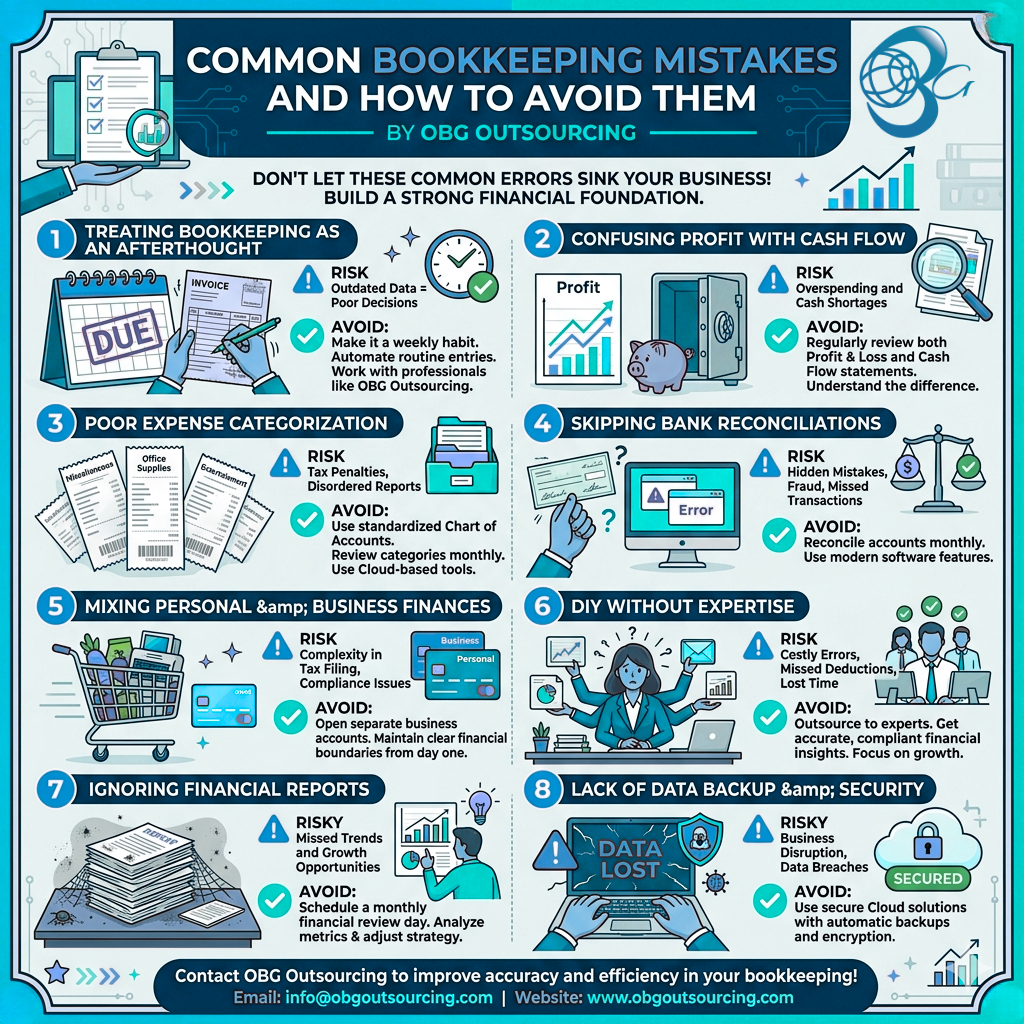
1. Treating Bookkeeping as an Afterthought
Many businesses delay bookkeeping until tax season or when something goes wrong.
Why it’s risky:
Financial data loses value when it’s outdated. Late bookkeeping leads to poor decision-making and unnecessary stress.
How to avoid it:
Turn bookkeeping into a weekly habit. Even better—automate routine entries and work with professionals like OBG Outsourcing to keep everything current and accurate.
2. Confusing Profit with Cash Flow
Seeing profits on paper doesn’t always mean money in the bank.
Why it’s risky:
You might overspend, assuming your business is financially healthy, only to face cash shortages.
How to avoid it:
Regularly review both your Profit & Loss statement and your Cash Flow statement. Understanding the difference is key to sustainable growth.
3. Poor Expense Categorization
Mislabeling expenses may seem harmless—but it can distort your financial reports.
Why it’s risky:
Incorrect categorization affects tax deductions, budgeting accuracy, and financial insights.
How to avoid it:
Use a standardized chart of accounts and review expense categories monthly. Cloud-based tools can help automate this process.
4. Skipping Bank Reconciliations
If your books don’t match your bank statements, something is off.
Why it’s risky:
Unreconciled accounts can hide errors, fraud, or missed transactions.
How to avoid it:
Reconcile your accounts at least once a month. Set reminders or automate reconciliation with modern accounting software.
5. Mixing Personal and Business Finances
This is one of the most common mistakes among startups and small business owners.
Why it’s risky:
It creates confusion, complicates tax filing, and may lead to compliance issues.
How to avoid it:
Open separate business bank accounts and credit cards. Maintain clear financial boundaries from day one.
6. DIY Without Expertise
Doing everything yourself might save money upfront—but can cost more in the long run.
Why it’s risky:
Errors, missed deductions, and compliance issues can lead to penalties and lost opportunities.
How to avoid it:
Outsource bookkeeping to experienced professionals. At OBG Outsourcing, we ensure accuracy, compliance, and real-time financial insights—so you can focus on growing your business.
7. Ignoring Financial Reports
Many business owners generate reports but don’t actually review them.
Why it’s risky:
You miss trends, warning signs, and growth opportunities.
How to avoid it:
Schedule a monthly “financial review day.” Analyze key metrics and adjust your strategy accordingly.
8. Lack of Data Backup & Security
Financial data is sensitive—and losing it can be devastating.
Why it’s risky:
Data loss, cyber threats, or system crashes can disrupt your business.
How to avoid it:
Use secure, cloud-based bookkeeping solutions with automatic backups and strong encryption.
Final Thoughts
Bookkeeping isn’t just about numbers—it’s about building a strong financial foundation for your business. Avoiding these common mistakes can save you time, money, and unnecessary stress.
At OBG Outsourcing, we combine expertise with technology to deliver accurate, efficient, and scalable bookkeeping solutions tailored to your business needs.
_(6).jpg)


1.png)
_(5).jpg)
.jpg)
_(4).jpg)
_(1).jpg)
_(2).jpg)
.png)