 USA
USA UK
UK Australia
 UAE
UAE Canada
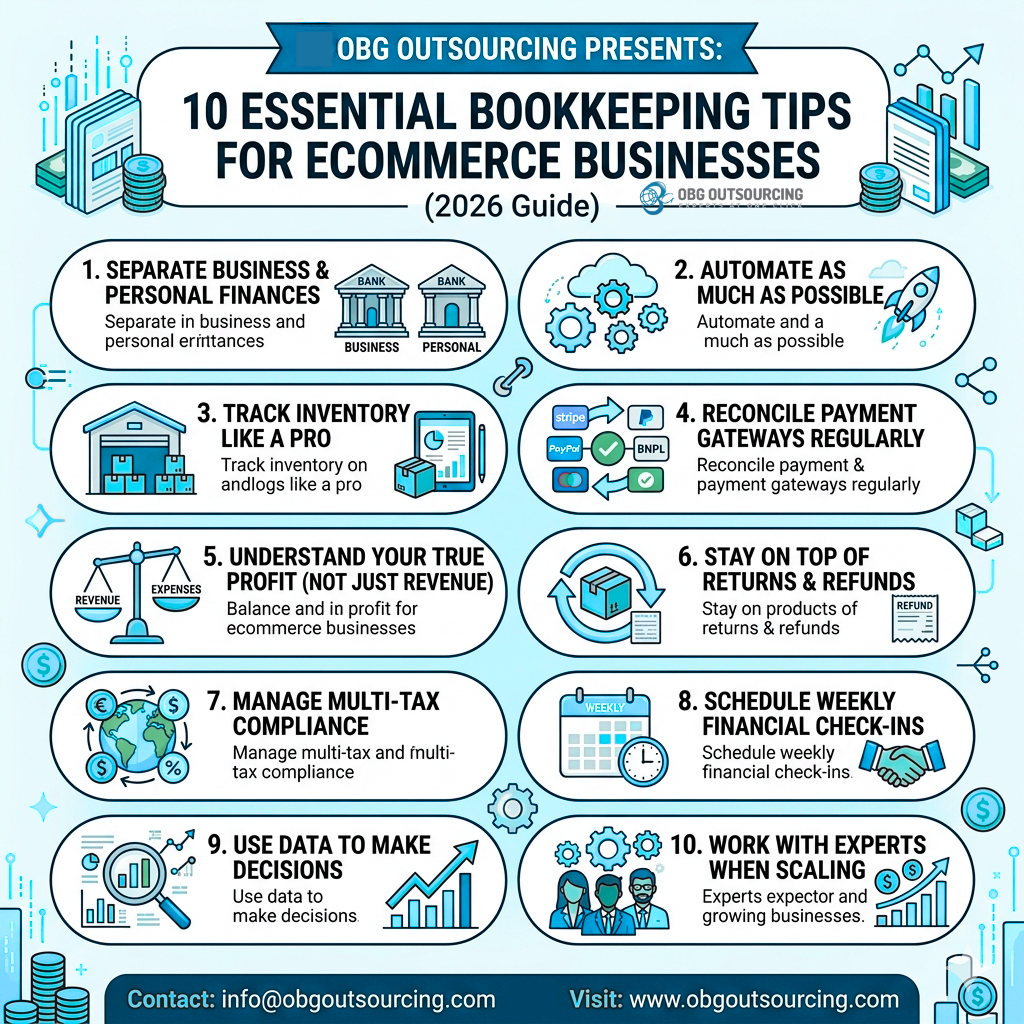
Running an eCommerce business today is more than just listing products and driving traffic—it’s about controlling your numbers in real time. Without clean, accurate bookkeeping, even a fast-growing online store can run into cash flow issues, tax complications, or profit confusion.
Here’s a modern, practical guide to help you stay financially sharp and scalable.
1. Separate Business and Personal Finances
This sounds basic, but many eCommerce founders still mix accounts—especially in the early stages.
Why it matters:
Cleaner records
Easier tax filing
Professional financial tracking
Open a dedicated business bank account and payment gateway accounts for your store.
2. Automate as Much as Possible
Manual bookkeeping is outdated—and risky.
Use automation to:
Sync sales from platforms (Shopify, Amazon, etc.)
Track expenses automatically
Generate invoices instantly
Result: Less human error, more time to grow your business.
3. Track Inventory Like a Pro
Inventory is one of the biggest financial factors in eCommerce.
Common mistakes:
Not updating stock values
Ignoring damaged/returned items
Miscalculating cost of goods sold (COGS)
Use inventory tracking systems that integrate with your accounting tools to maintain real-time accuracy.
4. Reconcile Payment Gateways Regularly
eCommerce businesses deal with multiple payment channels:
Credit cards
PayPal / Stripe
Buy-now-pay-later services
Each platform deducts fees, delays payouts, and reports transactions differently.
Tip:
Reconcile your payment gateways weekly, not monthly, to avoid discrepancies.
5. Understand Your True Profit (Not Just Revenue)
High sales don’t always mean high profit.
Factor in:
Platform fees
Shipping costs
Returns and refunds
Marketing spend
Create a habit of reviewing net profit margins, not just total sales.
6. Stay on Top of Returns & Refunds
Returns are part of eCommerce—but they can silently eat your profits if not tracked properly.
Best practice:
Record returns separately
Adjust inventory immediately
Track refund trends to identify problem products
7. Manage Multi-Tax Compliance
If you sell across regions or countries, taxes can get complicated quickly.
You may deal with:
VAT / GST
Sales tax in different states
Import/export duties
Keep tax records organized and updated to avoid last-minute stress or penalties.
8. Schedule Weekly Financial Check-ins
Instead of waiting until month-end, review your numbers weekly:
Cash flow status
Expenses vs budget
Sales trends
Outstanding payments
This habit gives you control—not surprises.
9. Use Data to Make Decisions
Your bookkeeping data isn’t just for compliance—it’s a growth tool.
Use it to:
Identify best-selling products
Cut unprofitable items
Optimize pricing strategies
Plan marketing budgets
10. Work with Experts When Scaling
As your eCommerce business grows, bookkeeping becomes more complex.
Outsourcing to professionals helps:
Ensure accuracy
Save time
Stay compliant
Gain financial insights
Final Thoughts
Bookkeeping is no longer just a back-office task—it’s a strategic advantage. When done right, it gives eCommerce businesses the clarity to scale confidently, reduce risks, and maximize profits.
If your numbers are clean, your decisions become sharper—and your growth becomes sustainable.
_(6).jpg)


1.png)
_(5).jpg)
.jpg)
_(4).jpg)
_(1).jpg)
_(2).jpg)
.png)