 USA
USA UK
UK Australia
 UAE
UAE Canada
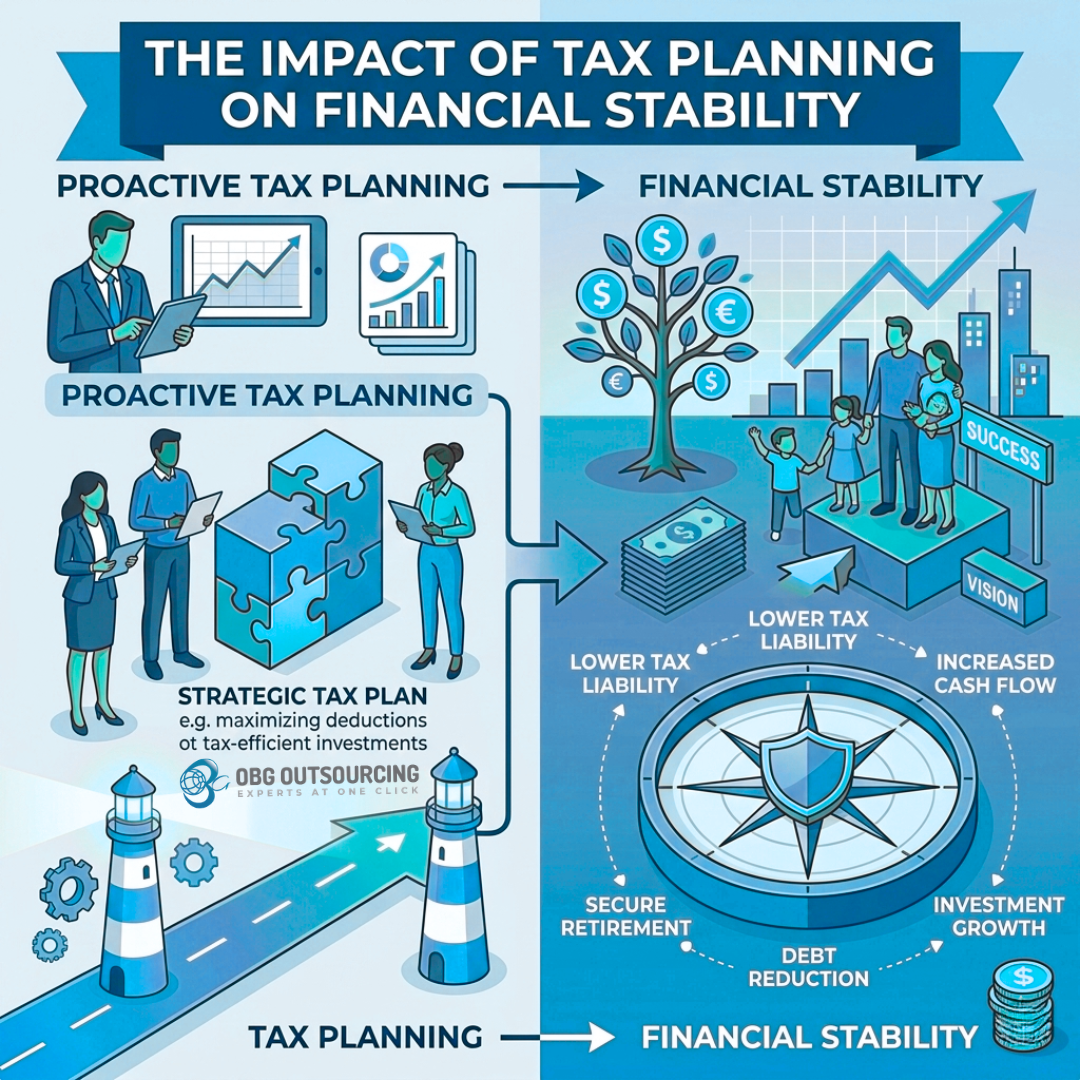
In today’s fast-changing financial landscape, managing income alone is not enough to ensure long-term stability. True financial security comes from strategic planning, and one of the most powerful tools in that strategy is effective tax planning. Individuals and businesses that plan their taxes proactively can optimize their finances, reduce liabilities, and strengthen their overall financial position.
Tax planning is not just about saving money during the tax season. It is a year-round financial strategy that influences cash flow, investments, business growth, and long-term wealth creation.
Understanding Tax Planning in Modern Finance
Tax planning refers to the strategic arrangement of financial activities to minimize tax liabilities while remaining compliant with tax laws and regulations. It involves evaluating income sources, expenses, deductions, exemptions, and investments to achieve optimal financial outcomes.
Modern tax planning goes beyond basic deductions. It includes strategies such as:
Optimizing investment portfolios for tax efficiency
Structuring business operations strategically
Utilizing tax credits and government incentives
Planning retirement and long-term wealth strategies
When done correctly, tax planning becomes a critical pillar of financial management.
How Tax Planning Improves Financial Stability
1. Enhances Cash Flow Management
Proper tax planning allows individuals and businesses to anticipate tax liabilities and allocate funds accordingly. Instead of facing unexpected tax burdens, taxpayers can manage payments smoothly throughout the year.
Better cash flow management leads to:
Reduced financial stress
Improved operational stability
More funds available for growth and investments
2. Reduces Financial Risks
Without proper tax planning, businesses and individuals may face penalties, audits, and compliance risks. Strategic planning ensures adherence to tax laws, reducing the chances of costly mistakes.
Proactive tax strategies help maintain financial discipline and prevent sudden financial disruptions.
3. Supports Long-Term Wealth Building
Tax-efficient investment strategies allow individuals and businesses to retain more earnings and grow wealth over time.
Examples include:
Tax-advantaged retirement accounts
Capital gains optimization
Strategic asset allocation
These strategies ensure that income is not only earned but also preserved and grown efficiently.
4. Encourages Smart Investment Decisions
Taxes significantly impact investment returns. Without considering tax implications, investors may lose a portion of their profits unnecessarily.
Tax planning helps investors:
Choose tax-efficient investment vehicles
Optimize timing for asset sales
Balance short-term and long-term gains
This leads to better portfolio performance and financial security.
5. Strengthens Business Sustainability
For businesses, tax planning is essential for maintaining profitability and financial stability. Strategic tax management allows companies to:
Reinvest savings into operations
Improve budgeting and forecasting
Maintain compliance with evolving regulations
Businesses that incorporate tax planning into their financial strategies often gain a competitive advantage in their industries.
The Role of Professional Tax Experts
Tax laws are constantly evolving, and navigating them without expertise can be challenging. Professional tax advisors and outsourcing firms help businesses and individuals develop compliant, efficient, and future-focused tax strategies.
Professional tax support provides:
Accurate tax reporting
Identification of eligible deductions and credits
Strategic tax forecasting
Compliance with local and international tax regulations
Partnering with experienced professionals ensures that tax planning becomes a growth tool rather than a compliance burden.
Integrating Tax Planning into Financial Strategy
To maximize financial stability, tax planning should be integrated into overall financial management rather than treated as a last-minute task.
Key practices include:
Conducting periodic financial reviews
Aligning tax strategies with investment goals
Planning for retirement and estate management
Leveraging tax incentives offered by governments
A structured approach helps maintain financial clarity and long-term stability.
Final Thoughts
Tax planning plays a fundamental role in building and maintaining financial stability. By reducing tax burdens, improving cash flow, and supporting strategic investments, it empowers individuals and businesses to strengthen their financial foundations.
In an increasingly complex financial environment, proactive tax planning is not merely an option—it is a necessity for sustainable financial growth and security.
Organizations that integrate smart tax strategies into their financial planning are better positioned to navigate challenges, seize opportunities, and build a resilient financial future.
_(6).jpg)


1.png)
_(5).jpg)
.jpg)
_(4).jpg)
_(1).jpg)
_(2).jpg)
.png)