 USA
USA UK
UK Australia
 UAE
UAE Canada
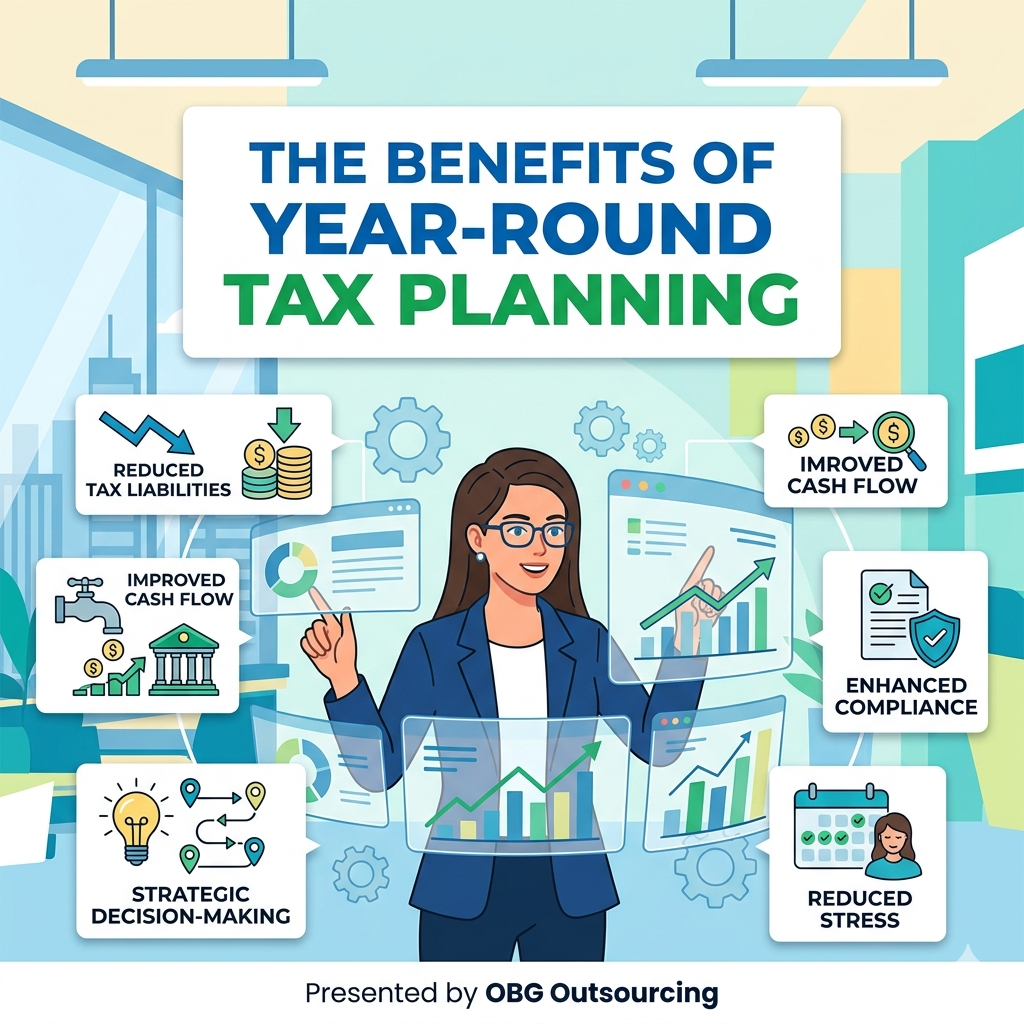
Many businesses treat taxes as a once-a-year obligation—something to address only when deadlines approach. However, modern businesses are discovering that year-round tax planning is not just a smart practice; it is a powerful strategy for financial growth and stability. Instead of reacting to tax season, proactive organizations manage their tax responsibilities continuously throughout the year.
By shifting from reactive tax filing to strategic tax planning, companies can reduce liabilities, improve cash flow, and make smarter financial decisions.
Why Year-Round Tax Planning Matters
Tax regulations, deductions, and financial obligations constantly evolve. Waiting until the end of the fiscal year often means missed opportunities. Year-round planning allows businesses to monitor financial activity regularly and adjust strategies in real time.
Continuous tax planning provides better visibility into finances and helps organizations avoid last-minute surprises.
Key benefits include:
Reduced tax liabilities
Improved compliance with changing tax regulations
Better financial forecasting
Fewer errors during tax filing
Enhanced business decision-making
Businesses that adopt this approach gain financial clarity and strategic control over their operations.
1. Better Cash Flow Management
One of the most significant advantages of year-round tax planning is improved cash flow management.
When businesses plan taxes throughout the year, they can accurately estimate tax obligations and allocate funds accordingly. This eliminates the stress of large, unexpected tax payments during filing season.
Regular tax reviews also help companies:
Identify deductible expenses
Track eligible tax credits
Plan capital investments at the right time
Ultimately, businesses maintain healthier financial stability.
2. Maximizing Tax Deductions and Credits
Many businesses lose valuable deductions simply because they fail to track expenses properly during the year.
Year-round tax planning ensures that companies consistently monitor:
Operational expenses
Business travel and equipment purchases
Employee benefits and payroll taxes
Depreciation opportunities
By documenting these activities continuously, businesses can maximize eligible deductions and reduce their overall tax burden.
3. Staying Compliant with Changing Tax Regulations
Tax laws frequently change, and staying compliant can be challenging without ongoing monitoring.
With continuous tax planning, businesses remain updated with:
Regulatory changes
New tax credits or incentives
Updated filing requirements
This proactive approach helps organizations avoid penalties, fines, and compliance risks.
4. Smarter Business Decisions
Tax planning should be part of every major financial decision.
Whether a business is considering expanding operations, purchasing new equipment, or hiring additional employees, tax implications should be evaluated beforehand.
Year-round tax planning allows businesses to:
Analyze tax impacts before investments
Structure transactions more efficiently
Plan growth strategies with tax efficiency in mind
This leads to more informed and profitable decisions.
5. Reduced Stress During Tax Season
When businesses track financial data and tax obligations throughout the year, tax season becomes far less stressful.
Instead of scrambling to gather documents and calculate liabilities, organizations already have accurate records and prepared financial statements.
This streamlined process allows business owners and finance teams to focus on strategic goals rather than administrative chaos.
6. Stronger Financial Forecasting
Year-round tax planning also supports better financial forecasting.
Businesses gain a clearer picture of their financial health and can project future tax obligations more accurately. This enables:
Improved budgeting
Strategic investment planning
Long-term financial growth
With reliable financial insights, companies can confidently plan for expansion and innovation.
The Role of Outsourcing in Tax Planning
For many businesses, maintaining an in-house tax planning team can be expensive and resource-intensive. Outsourcing tax planning and accounting functions provides access to experienced professionals who monitor tax obligations throughout the year.
By partnering with experts, companies benefit from:
Continuous tax monitoring
Professional compliance support
Advanced financial reporting
Cost-effective financial management
Outsourcing ensures that businesses remain compliant while optimizing their tax strategies.
Final Thoughts
Year-round tax planning transforms tax management from a stressful annual task into a strategic financial advantage. Businesses that adopt this proactive approach can reduce liabilities, enhance compliance, and make smarter financial decisions.
In today's competitive environment, tax planning should be integrated into everyday financial management. Organizations that prioritize continuous tax strategy position themselves for sustainable growth, improved cash flow, and long-term success.
_(6).jpg)


1.png)
_(5).jpg)
.jpg)
_(4).jpg)
_(1).jpg)
_(2).jpg)
.png)