 USA
USA UK
UK Australia
 UAE
UAE Canada
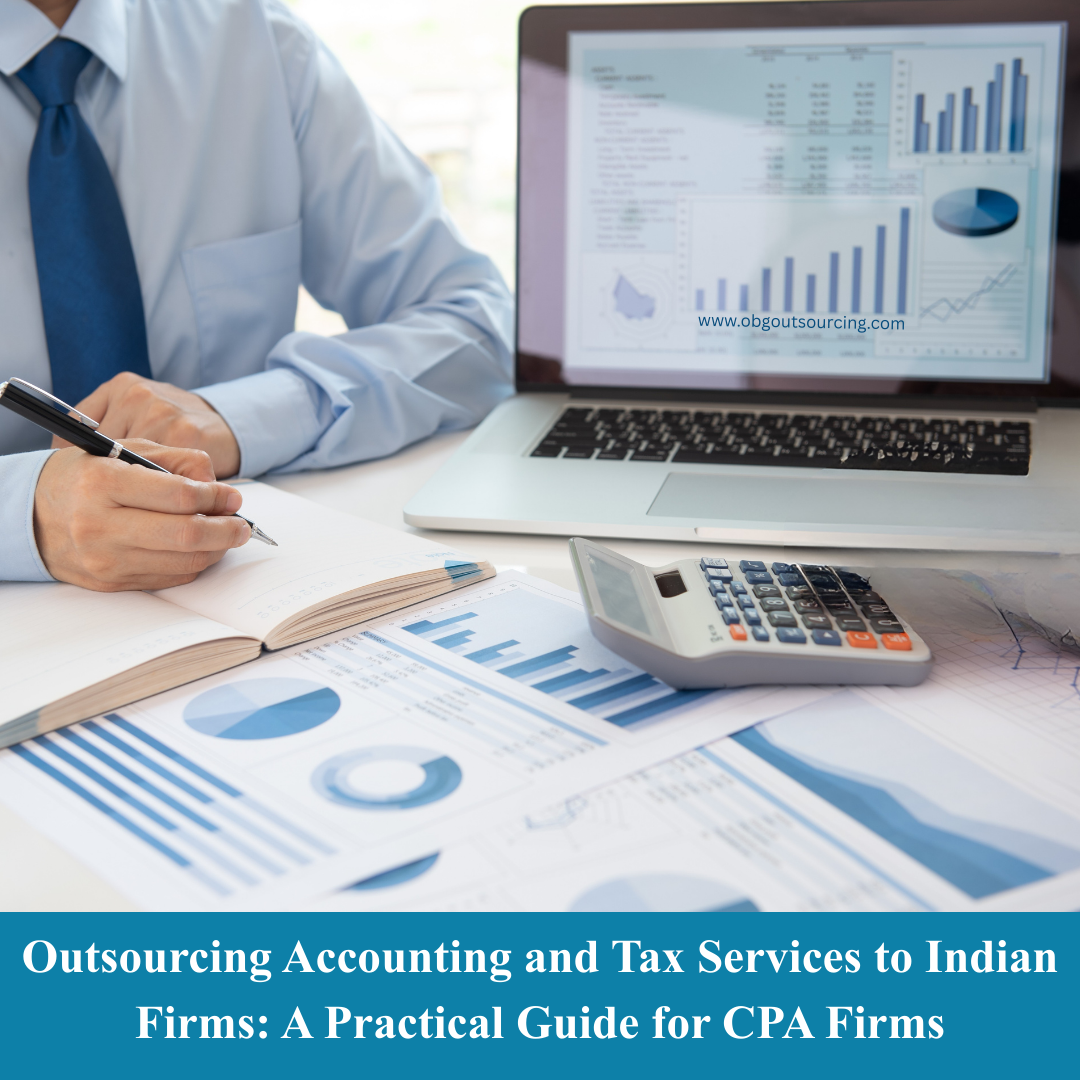
Outsourcing accounting and tax services to Indian firms has become a strategic solution for CPA firms facing rising costs, staffing shortages, and intense tax season workloads. Indian outsourcing providers support CPA firms with bookkeeping, tax preparation, compliance, and back-office accounting—allowing partners to focus on client advisory and growth.
This guide explains how CPA firms can successfully outsource accounting and tax work to India, what services can be outsourced, and how to select the right provider without compromising quality or compliance.
Why CPA Firms Outsource Accounting and Tax Services to India
CPA firms outsource to India for several practical reasons:
Access to a large pool of trained accounting professionals
Significant cost efficiency compared to in-house staffing
Ability to scale teams during peak tax seasons
Time zone advantage for overnight turnaround
Familiarity with US GAAP, IRS forms, and accounting software
Outsourcing is no longer just about cost savings—it is about operational efficiency and consistency.
Common Accounting and Tax Services Outsourced to Indian Firms
Bookkeeping and Accounting Support
CPA firms commonly outsource:
Monthly bookkeeping
Bank and credit card reconciliations
Accounts payable and receivable
Chart of accounts cleanup
Monthly and year-end close support
Tax Preparation Support
Indian outsourcing teams assist with:
Individual tax return preparation support
Business tax return workpapers
Data organization and validation
Depreciation schedules
Tax reconciliation support
Final review and filing always remain with the CPA firm.
Tax Compliance and Reporting
Outsourced teams also support:
Sales tax data preparation
Payroll tax reconciliations
Information return support
Compliance documentation
Audit-ready schedules
How to Choose an Outsourcing Provider for CPA Firm Tax Work in India
Choosing the right outsourcing provider is critical. CPA firms should evaluate providers based on the following criteria.
1. Experience With CPA Firm Workflows
An ideal outsourcing provider should understand:
CPA firm review processes
Tax season deadlines
Reviewer notes and documentation standards
Workpaper-based workflows
Firms unfamiliar with CPA processes often create rework instead of saving time.
2. Knowledge of US Accounting and Tax Standards
Ensure the outsourcing team understands:
US GAAP
Cash vs accrual accounting
IRS forms and schedules
Multi-entity and multi-state considerations
This reduces errors and review time.
3. Technology and Software Expertise
Your outsourcing provider should be proficient in:
QuickBooks Online
Xero
Sage
Zoho Books
Tax preparation software used by your firm
Technology alignment is essential for smooth collaboration.
4. Quality Control and Review Process
Ask how quality is maintained:
Internal review checklists
Error escalation process
Documentation of changes
Consistency year over year
Quality control is more important than speed alone.
5. Data Security and Confidentiality
Since tax and accounting data is sensitive, ensure:
Secure cloud-based access
Confidentiality agreements
Controlled user permissions
Compliance with data protection standards
Security should never be compromised for cost.
6. Communication and Turnaround Expectations
Clear communication avoids misunderstandings:
Defined turnaround times
Single point of contact
Regular status updates
Availability during US business hours
Strong communication leads to better outcomes.
Affordable Indian Firms for Outsourced Tax Compliance Services
Affordability is one of the biggest advantages of outsourcing to India, but cost should be evaluated alongside quality.
CPA firms should look for:
Transparent pricing models
Flexible engagement options
No long-term lock-in unless required
Scalable capacity during peak seasons
Low cost without structure often leads to higher long-term expenses due to rework.
Benefits CPA Firms Gain From Outsourcing to India
When done correctly, outsourcing delivers:
Reduced staffing pressure
Faster turnaround during tax season
Lower operating costs
Improved consistency and documentation
Ability to focus on advisory and client relationships
Outsourcing becomes an extension of the CPA firm—not a replacement.
Common Mistakes CPA Firms Should Avoid
Outsourcing without defined SOPs
Treating outsourced teams as data-entry only
- Ignoring review documentation
- Changing providers frequently
- Choosing solely based on lowest price
Successful outsourcing is built on process and partnership.
Best Practices for Successful Outsourcing
Start with a pilot project
Provide clear templates and checklists
- Maintain final review control
- Communicate expectations upfront
- Review performance regularly
These practices ensure long-term success.
Final Thoughts
Outsourcing accounting and tax services to Indian firms is a proven strategy for CPA firms seeking scalability, efficiency, and cost control. The key lies in choosing the right partner, setting clear processes, and maintaining quality oversight.
When managed properly, outsourcing strengthens CPA firms rather than weakening control—and allows partners to focus on what matters most: clients and advisory services.
_(6).jpg)


1.png)
_(5).jpg)
.jpg)
_(4).jpg)
_(1).jpg)
_(2).jpg)
.png)