 USA
USA UK
UK Australia
 UAE
UAE Canada
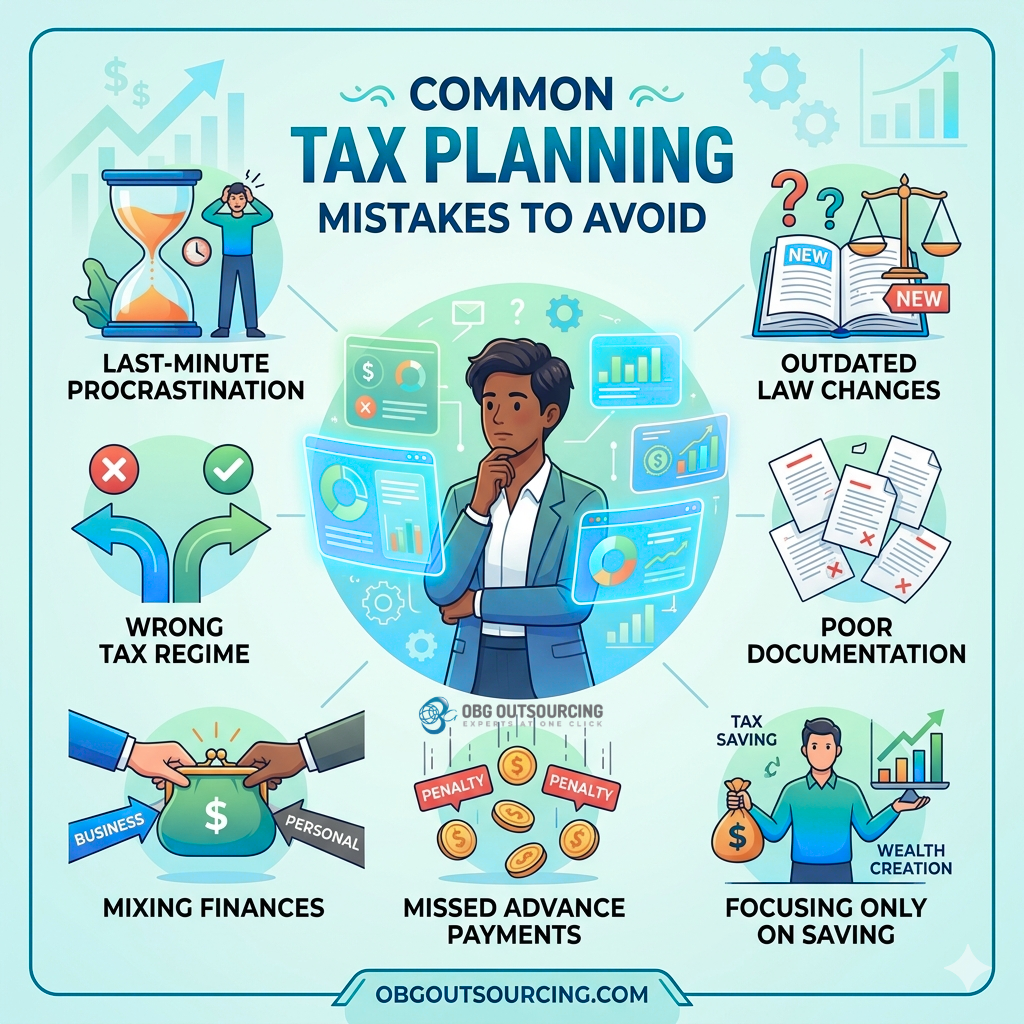
Tax planning is no longer just a once-a-year activity—it’s a continuous financial strategy that can significantly impact your savings, cash flow, and long-term wealth. Yet, many individuals and businesses unknowingly fall into common traps that lead to higher tax liabilities, penalties, or missed opportunities.
Let’s explore the most frequent tax planning mistakes—and more importantly, how to avoid them with a smarter, modern approach.
1. Procrastinating Until the Last Minute
One of the biggest mistakes is treating tax planning as a deadline-driven task rather than a year-round strategy. Waiting until the end of the financial year limits your options and forces rushed decisions.
Avoid it:
Start early. Spread investments and deductions throughout the year to maximize benefits and reduce stress.
2. Ignoring Changes in Tax Laws
Tax regulations evolve frequently. Relying on outdated information can result in incorrect filings or missed deductions.
Avoid it:
Stay updated with current tax rules or consult professionals who track legislative changes and adapt strategies accordingly.
3. Not Choosing the Right Tax Regime
With multiple tax regimes available, selecting the wrong one can lead to unnecessary tax payments.
Avoid it:
Evaluate both regimes based on your income structure, deductions, and financial goals before making a decision each year.
4. Overlooking Eligible Deductions and Exemptions
Many taxpayers fail to claim all the deductions they are entitled to—simply due to lack of awareness.
Avoid it:
Maintain a checklist of eligible deductions such as investments, insurance premiums, education loans, and business expenses.
5. Poor Documentation and Record-Keeping
Missing invoices, receipts, or financial records can lead to denied claims or compliance issues.
Avoid it:
Digitize your records. Use cloud-based tools or accounting systems to securely store and organize documents.
6. Mixing Personal and Business Finances
For entrepreneurs and small business owners, blending personal and business transactions can complicate tax filing and raise red flags.
Avoid it:
Maintain separate bank accounts and clear financial boundaries to ensure accurate reporting and compliance.
7. Ignoring Advance Tax Payments
Failing to pay advance tax on time can result in interest penalties and unnecessary financial strain.
Avoid it:
Estimate your income periodically and pay advance tax installments as required to avoid last-minute burdens.
8. Not Planning for Capital Gains
Many taxpayers overlook tax implications when selling assets like property, stocks, or mutual funds.
Avoid it:
Plan asset sales strategically. Consider timing, reinvestment options, and exemptions to minimize tax liability.
9. DIY Tax Filing Without Proper Knowledge
While online tools make filing easier, a lack of understanding can lead to errors, missed deductions, or compliance issues.
Avoid it:
If your financial situation is complex, seek expert assistance instead of relying solely on automated tools.
10. Focusing Only on Tax Saving, Not Wealth Creation
Tax saving should not be the sole objective. Poor investment choices made only for tax benefits can hurt long-term financial growth.
Avoid it:
Align tax planning with your overall financial goals—wealth creation, risk management, and liquidity.
Final Thoughts
Tax planning is not about avoiding taxes—it’s about managing them efficiently and legally. By avoiding these common mistakes, you can optimize your finances, stay compliant, and build a stronger financial future.
A proactive, informed approach makes all the difference. Whether you're an individual taxpayer or a growing business, smart tax planning today ensures better financial stability tomorrow.
Looking for expert support?
Visit www.obgoutsourcing.com to discover professional tax planning and outsourcing solutions tailored to your needs.
_(6).jpg)


1.png)
_(5).jpg)
.jpg)
_(4).jpg)
_(1).jpg)
_(2).jpg)
.png)