 USA
USA UK
UK Australia
 UAE
UAE Canada
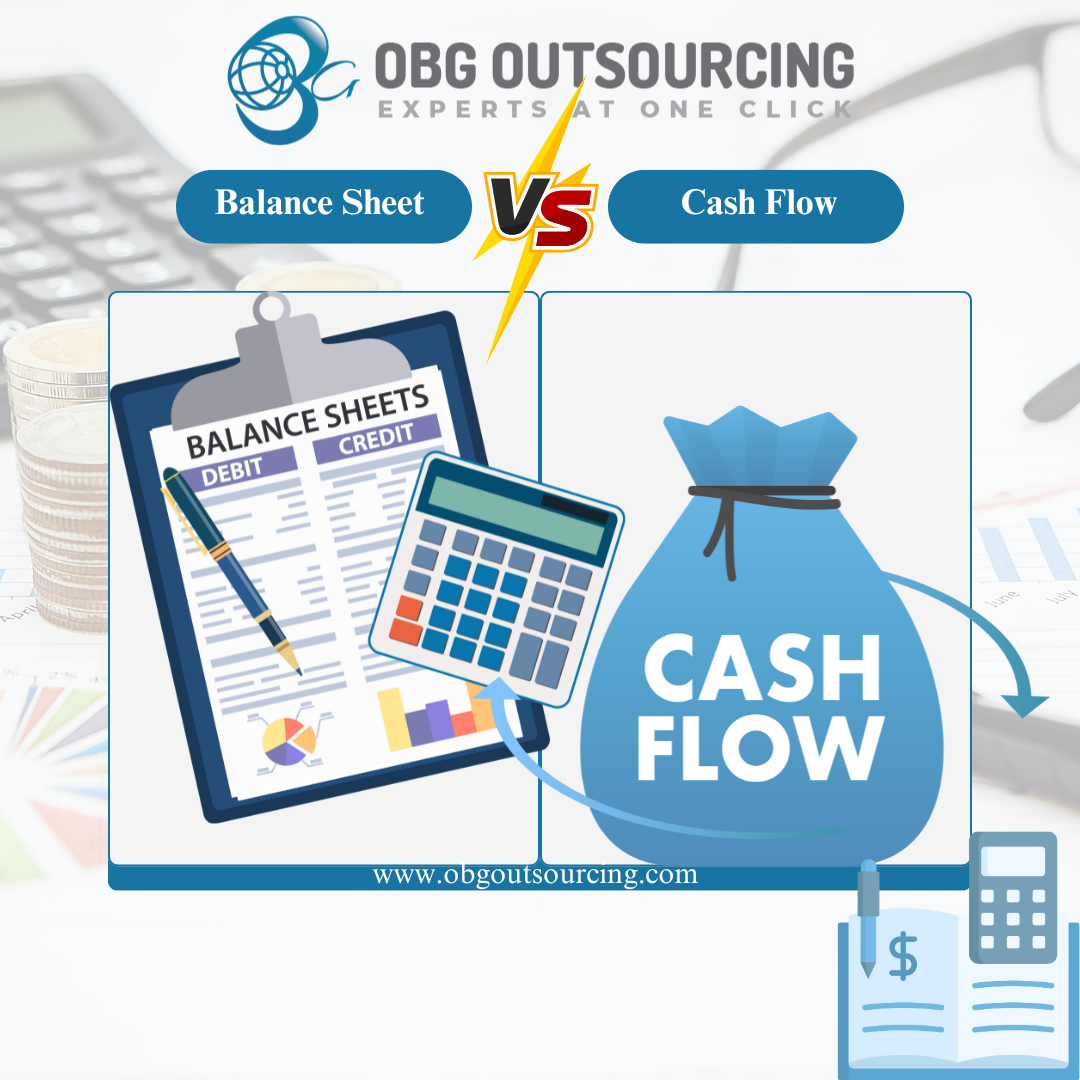
Balance Sheet vs Cash Flow Statement: What Every Business Owner Should Know
Every successful business relies on three core financial statements:
Balance Sheet
Income Statement (Profit and Loss)
Cash Flow Statement
While each serves a unique purpose, they are interconnected and essential for understanding your company’s financial health. In this post, OBG Outsourcing explains the difference between a balance sheet and a cash flow statement, how they relate to the income statement, and why you need all three to run a successful business
What Are the Three Financial Statements?
Before diving into the comparison, here’s a quick overview:
Balance Sheet: Snapshot of your assets, liabilities, and equity at a specific point in time.
Income Statement: Tracks your revenues and expenses over a period.
Cash Flow Statement: Shows actual cash movement in and out during that same period.
Together, they help answer:
What do we own?
Are we profitable?
Can we meet our financial obligations?
Balance Sheet Overview
The balance sheet gives a snapshot of your company’s financial standing. It answers:
What do we own, and what do we owe?
Key components:
Assets – Cash, receivables, inventory, equipment
Liabilities – Loans, accounts payable, credit cards
Equity – Retained earnings and owner’s capital
It does not reflect cash movement — that’s the role of the cash flow statement.
Cash Flow Statement Overview
The cash flow statement focuses on actual cash in and out, helping you understand liquidity.
It has three sections:
Operating Activities – Day-to-day cash from sales and services
Investing Activities – Buying or selling equipment or investments
Financing Activities – Loans, repayments, owner contributions
This report shows whether your business can pay bills, cover payroll, and support growth.
Balance Sheet vs Cash Flow: Key Differences
| Feature | Balance Sheet | Cash Flow Statement |
| What It Shows | Assets, liabilities, equity | Cash inflows and outflows |
| Timing | Single point in time | Over a time period |
| Purpose | Measures financial position | Measures liquidity and cash movement |
| Format | Static snapshot | Dynamic activity report |
| Source of Data | Ending balances | Cash-based transaction records |
Cash Flow vs Income Statement: Key Difference
Business owners often confuse these two reports:
The income statement tracks revenues and expenses, including non-cash items like depreciation.
The cash flow statement tracks only actual cash movement.
FAQ: Is cash on the income statement?
No. Cash itself is not listed on the income statement—only the transactions that impact it.
How the Three Financial Statements Work Together
Each report serves a role:
Income Statement shows profit/loss
Balance Sheet shows financial position
Cash Flow Statement shows liquidity
Used together, they give a complete view of your financial health.
Why Business Owners Must Understand This
Knowing the difference between the balance sheet, income statement, and cash flow can help you:
Avoid surprise cash shortages
Improve decision-making
Plan growth and manage debt wisely
Understand profitability and solvency
Profit doesn’t always mean cash. And a positive bank balance doesn’t guarantee financial health.
How OBG Outsourcing Helps You Master Financial Reporting
At OBG Outsourcing, we help small businesses and service-based entrepreneurs gain clarity on their numbers. Here’s how:
We deliver accurate monthly reports
We help you understand each report’s purpose
We assist with cash flow forecasting and budgeting
We use tools like QuickBooks Online and Xero for real-time insights
You’ll always know where your business stands—and where it’s headed.
Final Thoughts
The balance sheet tells you what you own. The cash flow statement shows whether you can stay afloat. And the income statement reveals if you're profitable.
Want clean, clear financials every month?
Let OBG Outsourcing handle your reporting—so you can focus on growing your business.
???? Contact us today for your free consultation.
_(6).jpg)


1.png)
_(5).jpg)
.jpg)
_(4).jpg)
_(1).jpg)
_(2).jpg)
.png)